This is a very simple sauce for red meat.
Ingredients:
1 onion, sliced
2 cloves garlic, crushed
2 tbs red wine vinegar
1/2 tsp whole mustard seeds
freshly ground black pepper
sea salt
olive oil
Heat some olive oil in a small fry pan. Add the mustard seeds. When they start to pop, add the onions and garlic. Fry for five minutes, then add the red wine vinegar. Season to taste with freshly ground black pepper and sea salt. Simmer until onions are very soft. Transfer everything into the bowl of a food processor and blitz until smooth. Drain sauce to remove excess liquid and then spoon a small amount next to each piece of meat.
Showing posts with label sauce. Show all posts
Showing posts with label sauce. Show all posts
Tuesday, February 3, 2009

Monday, February 2, 2009
Simple avocado dip
This dip is very simple. I first made it on one of those lazy days--I was tired from work and really couldn't be bothered mucking about with straining and whisking yoghurt or grinding spices. I had an avocado. I had fresh chilli and garlic. Tabasco, too. What else did I need?
I used this as a dip for raw carrot and cucumber. You could use it for chips or about anything. Could even throw it into tacos or burritos or any of those tortilla-wrapped delights.
Ingredients:
1 large, ripe avocado
2+ fresh chillies (to taste)
2 cloves garlic, peeled
a splash of Tabasco
freshly ground black pepper
sea salt
Cut the avocado in half. Peel the skin off and remove the stone. Tear the flesh into chunks and drop it into the bowl of a food processor, along with the garlic and two chillies. Blitz until smooth. Season with freshly ground black pepper, sea salt and Tabasco. Blitz. Add more chillies if desired.
I used this as a dip for raw carrot and cucumber. You could use it for chips or about anything. Could even throw it into tacos or burritos or any of those tortilla-wrapped delights.
Ingredients:
1 large, ripe avocado
2+ fresh chillies (to taste)
2 cloves garlic, peeled
a splash of Tabasco
freshly ground black pepper
sea salt
Cut the avocado in half. Peel the skin off and remove the stone. Tear the flesh into chunks and drop it into the bowl of a food processor, along with the garlic and two chillies. Blitz until smooth. Season with freshly ground black pepper, sea salt and Tabasco. Blitz. Add more chillies if desired.
Friday, January 30, 2009
Goat kebabs with a spiced sour cream dipping sauce
Here's another recipe for goat kebabs. Again, to get the necessary boneless meat it's best to ask the butcher to bone out a whole leg and dice the remaining meat. Retain the bone for stock.
Ingredients:
200 g boneless goat meat, cut into a 1.5 cm dice
150 g sour cream
2 small chillies
2 cloves garlic, peeled
1/2 onion, cut into quarters with slices separated
a handful of cherry tomatoes, cut in half
2-3 tablespoons of fresh coriander (a mix of leaves and stems)
1 tbs whole cumin seeds, lightly roasted
freshly ground black pepper
sea salt
olive oil
Thread the goat, tomato and onion onto metal skewers (if you only have bamboo ones, you'll need to soak them in water prior to use to prevent burning). Season with freshly ground pepper, sea salt and olive oil. Refrigerate for a hour.
Pre-heat the broiler or barbecue to medium low. Cook the goat kebabs for 20-25 minutes or until cooked through, basting occasionally with a little oil.
Meanwhile, prepare the dipping sauce by blitzing the coriander, chilli, cumin and garlic in a food processor. Whisk in to sour cream. Season to taste with salt and black pepper.
Ingredients:
200 g boneless goat meat, cut into a 1.5 cm dice
150 g sour cream
2 small chillies
2 cloves garlic, peeled
1/2 onion, cut into quarters with slices separated
a handful of cherry tomatoes, cut in half
2-3 tablespoons of fresh coriander (a mix of leaves and stems)
1 tbs whole cumin seeds, lightly roasted
freshly ground black pepper
sea salt
olive oil
Thread the goat, tomato and onion onto metal skewers (if you only have bamboo ones, you'll need to soak them in water prior to use to prevent burning). Season with freshly ground pepper, sea salt and olive oil. Refrigerate for a hour.
Pre-heat the broiler or barbecue to medium low. Cook the goat kebabs for 20-25 minutes or until cooked through, basting occasionally with a little oil.
Meanwhile, prepare the dipping sauce by blitzing the coriander, chilli, cumin and garlic in a food processor. Whisk in to sour cream. Season to taste with salt and black pepper.
Goat kebabs with a sherry and paprika marinade
These are very simple kebabs. You could jazz them up with some fresh herbs, garlic, chilli powder or about anything else. Me, I couldn't really be bothered. I had some sherry I wanted to use up and wanted to do something dramatically different to the other lot of goat kebabs I'm doing today. You can barbecue them, broil them or even roast them. Either way, be careful not to overcook them. Goat meat is quite lean. It won't withstand as much punishment as, say, lamb. And yes, you can make these with lamb if you're unable to source goat. Could use mutton too, I suppose.
To get boneless goat me, I bought a whole goat leg. I asked the butcher to bone it out and cut it into a 1.5 cm dice.
Ingredients:
200 g boneless goat meat, cut into a 1.5 cm dice
125 mL dry sherry (no need to measure it, just eyeball it)
1/2 onion, cut into quarters with slices separated
a handful of cherry tomatoes, cut in half
1 tbs sweet paprika
a generous slash of sherry vinegar
a splash of olive oil
a freshly ground black pepper
sea salt
Thread the meat, tomato and onion onto skewers. If you're using bamboo skewers, you'll have to soak them in water prior to use to prevent burning. Me, I make things easier by using metal skewers. I picked up some nice, long ones for a couple of dollars at the local discount shop. Once the kebabs are prepared, sit them in an oven tray (you can use any tray, really, but I used an oven tray as it was just the right size). Season with black pepper and paprika, then add the sherry, sherry vinegar and olive oil. Cover and refrigerate for a couple of hours at least. Open the cling film every so often to spoon the liquid ingredients over the meat. Just before cooking, sprinkle generously with sea salt.
Cook on or under a medium-low heat for 20-25 minutes, turning and basting frequently with the marinade.
To get boneless goat me, I bought a whole goat leg. I asked the butcher to bone it out and cut it into a 1.5 cm dice.
Ingredients:
200 g boneless goat meat, cut into a 1.5 cm dice
125 mL dry sherry (no need to measure it, just eyeball it)
1/2 onion, cut into quarters with slices separated
a handful of cherry tomatoes, cut in half
1 tbs sweet paprika
a generous slash of sherry vinegar
a splash of olive oil
a freshly ground black pepper
sea salt
Thread the meat, tomato and onion onto skewers. If you're using bamboo skewers, you'll have to soak them in water prior to use to prevent burning. Me, I make things easier by using metal skewers. I picked up some nice, long ones for a couple of dollars at the local discount shop. Once the kebabs are prepared, sit them in an oven tray (you can use any tray, really, but I used an oven tray as it was just the right size). Season with black pepper and paprika, then add the sherry, sherry vinegar and olive oil. Cover and refrigerate for a couple of hours at least. Open the cling film every so often to spoon the liquid ingredients over the meat. Just before cooking, sprinkle generously with sea salt.
Cook on or under a medium-low heat for 20-25 minutes, turning and basting frequently with the marinade.
Thursday, January 29, 2009
Thick red wine and garlic sauce
This sauce is suitable for all manner of red meats--beef, buffalo, kangaroo, emu, venison and, yeah, about anything else that's red and meaty. It's based on a Charlie Trotter recipe. His recipe used as much garlic with a whole bottle of wine, but here I wanted a much stronger garlic flavour. Too, I didn't use the capsicum or celery his recipe called for. And, yeah, substituted sherry vinegar for his balsamic, as it seemed--for no particularly compelling reason--right.
Ingredients:
250 mL red wine (I used cab sav)
1 tbs butter, softened
1 tbs port
1 tbs sherry vinegar
6 cloves garlic, sliced
2 bay leaves, torn
1 onion, sliced
1 tomato, diced
a splash of olive oil
freshly ground black pepper
sea salt
Heat some oil in a small saucepan. Fry the garlic and onion until soft. Season with sea salt and black pepper. Add the bay leaves, tomato, port and sherry vinegar. Reduce until the liquid is almost gone. Keep seasoning with salt and black pepper. Add the red wine and reduce by half. Take saucepan off heat and pour through a sieve into a jug or other vessel. Use a spoon to squeeze all the liquid you can out of the garlic, onion and tomato. Stir butter into the sauce and season again, if necessary.
Ingredients:
250 mL red wine (I used cab sav)
1 tbs butter, softened
1 tbs port
1 tbs sherry vinegar
6 cloves garlic, sliced
2 bay leaves, torn
1 onion, sliced
1 tomato, diced
a splash of olive oil
freshly ground black pepper
sea salt
Heat some oil in a small saucepan. Fry the garlic and onion until soft. Season with sea salt and black pepper. Add the bay leaves, tomato, port and sherry vinegar. Reduce until the liquid is almost gone. Keep seasoning with salt and black pepper. Add the red wine and reduce by half. Take saucepan off heat and pour through a sieve into a jug or other vessel. Use a spoon to squeeze all the liquid you can out of the garlic, onion and tomato. Stir butter into the sauce and season again, if necessary.
Monday, January 26, 2009
Barbecue chicken burgers
I didn't barbecue these burgers, so perhaps they shouldn't be really be called 'barbecue' anything. No, it was a bit too hot for me to be up for wandering down to the local park to gather the necessary wood. In an attempt to give them a barbecue flavour, though, I added a few drips of liquid smoke, a product my house mate picked up from USAFoods, to both the sauce and the burger patties during cooking. It's nowhere near as good as the real deal, of course, but when one is lazy one can't be fussy. Too, the secret behind making burger patties that don't fall apart in the pan or on the barbecue is to form the patties the night before and refrigerate them and then to cook them gently. There's absolutely no need to add egg, onion or bread crumbs to a burger patty.
Ingredients:
500 g chicken mince
4 burger buns, opened and lightly toasted under the broiler or on the grill
4 slices pineapple (well-drained if from a can)
2 cloves of garlic, minced
1 tomato, sliced and seasoned with sea salt and freshly ground black pepper
1 onion, sliced
a handful of rocket leaves, washed and drained
1/4 cup tomato ketchup
a shot of whisk(e)y
1 tbs Dijon mustard
1 tsp apple cider vinegar
1 tsp smoked paprika, plus extra to season
freshly ground black pepper
sea salt
hot sauce of your choice (I recommend a chipotle sauce, for its smoky flavour)
oil
A few hours, but preferably a day, before cooking the burgers, add a few drops of hot sauce, a pinch of paprika and a generous dose of freshly ground black pepper to the mince. Form the mince into patties. Don't make them too thin--if you're even close to McDonald's-style patties, you've overdone it. A good patty is just about 2 centimetres thick. Place the patties on a plate. Use the back of a teaspoon or the tip of your thumb to make a shallow indentation in the centre of each patty. Cover and refrigerate.
A half hour before cooking, take the patties out of the fridge and let them come up to room temperature. It's always important to do this when cooking meat, no matter your plans for it--roasting, barbecuing, frying, steaming--as it'll make for more even and marginally quicker cooking.
To make the sauce, fry the onions in a little oil for five minutes. Add the garlic. Fry until the onions are nicely caramelised, then add the shot of whisk(e)y. Once reduced, add the tomato ketchup, Dijon mustard, paprika and apple cider vinegar. Season to taste with sea salt and freshly ground black pepper. Cook for ten minutes over a low heat.
Fry the chicken patties in a little oil. Keep the heat low. Don't move them more than necessary. Season with sea salt and freshly ground black pepper as they cook. When cooked, add the patties to the lightly toasted buns with the rocket leaves, pineapple, tomato and sauce.
Ingredients:
500 g chicken mince
4 burger buns, opened and lightly toasted under the broiler or on the grill
4 slices pineapple (well-drained if from a can)
2 cloves of garlic, minced
1 tomato, sliced and seasoned with sea salt and freshly ground black pepper
1 onion, sliced
a handful of rocket leaves, washed and drained
1/4 cup tomato ketchup
a shot of whisk(e)y
1 tbs Dijon mustard
1 tsp apple cider vinegar
1 tsp smoked paprika, plus extra to season
freshly ground black pepper
sea salt
hot sauce of your choice (I recommend a chipotle sauce, for its smoky flavour)
oil
A few hours, but preferably a day, before cooking the burgers, add a few drops of hot sauce, a pinch of paprika and a generous dose of freshly ground black pepper to the mince. Form the mince into patties. Don't make them too thin--if you're even close to McDonald's-style patties, you've overdone it. A good patty is just about 2 centimetres thick. Place the patties on a plate. Use the back of a teaspoon or the tip of your thumb to make a shallow indentation in the centre of each patty. Cover and refrigerate.
A half hour before cooking, take the patties out of the fridge and let them come up to room temperature. It's always important to do this when cooking meat, no matter your plans for it--roasting, barbecuing, frying, steaming--as it'll make for more even and marginally quicker cooking.
To make the sauce, fry the onions in a little oil for five minutes. Add the garlic. Fry until the onions are nicely caramelised, then add the shot of whisk(e)y. Once reduced, add the tomato ketchup, Dijon mustard, paprika and apple cider vinegar. Season to taste with sea salt and freshly ground black pepper. Cook for ten minutes over a low heat.
Fry the chicken patties in a little oil. Keep the heat low. Don't move them more than necessary. Season with sea salt and freshly ground black pepper as they cook. When cooked, add the patties to the lightly toasted buns with the rocket leaves, pineapple, tomato and sauce.
Thursday, January 22, 2009
My berbere
Berbere is a spice blend used in Ethiopian cooking. There's no set recipe for berbere. Do a Google search and you'll find many variations. My 'recipe' is the result of much experimentation and research. An authentic berbere has many spices. Clearly, the recipes you see online that only call for three or four spices aren't even close to the real deal. My recipe, like many online, is not so much a straight berbere as it is a child of both berbere and mitmita. Real berbere contains quite a few spices you either can't get outside Ethiopia or, if you can, will have a tough time doing so. Berbere can be used as either a dry seasoning or made into a paste with shallots, garlic and ginger. Obviously you can use it in Ethiopian cooking, but it can be used for other purposes too. Experiment.
Ingredients:
8 green cardamom pods
4 pieces timiz*
1 small whole piece nutmeg
1 tbs chilli flakes
1 tbs white peppercorns
2 tsp coarse sea salt
2 tsp whole coriander seeds
2 tsp whole kororima seeds*
2 tsp sweet paprika
2 tsp whole cumin seeds
2 tsp whole ajwain seeds
1 tsp whole nigella seeds
1 tsp whole fenugreek seeds
1 tsp turmeric powder
1 tsp kosoret*
1/2 tsp cloves
1/4 tsp cinnamon
Pour everything into a small, non-stick fry pan and roast over a low flame until very pungent. Still occasionally. Note that you don't need oil or ghee. When spices are roasted, pour carefully into a mortar and pestle or electric spice grinder and grind until fine. Store in a jar, tin or zip lock bag. This stuff won't keep its flavour forever, so try and use it within a few weeks. That being said, it's best to make berbere and other spice blends a day or two before you need them. It gives the flavours and the aromas of the different spices time to get to know each other.
* I picked up timiz, kororima and kosoret at an Ethiopian grocer. I've never seen them anywhere else. Then again, I haven't looked anywhere other than the local South Asian and oriental supermarkets. If you can't find them in your local area, don't stress. Your berbere will still be ogod. Kororima is one of the most important spices in a traditional berbere. Still, don't worry if you can't find it. Just substitute the two teaspoons of kororima seeds with two teaspoons of coriander seeds. Kororima is a variety of coriander. The seeds are a slightly different shape and darker. Timiz, on the other hand, looks like a small pine cone. Kosoret is a small, crumbly, dried leaf.
Ingredients:
8 green cardamom pods
4 pieces timiz*
1 small whole piece nutmeg
1 tbs chilli flakes
1 tbs white peppercorns
2 tsp coarse sea salt
2 tsp whole coriander seeds
2 tsp whole kororima seeds*
2 tsp sweet paprika
2 tsp whole cumin seeds
2 tsp whole ajwain seeds
1 tsp whole nigella seeds
1 tsp whole fenugreek seeds
1 tsp turmeric powder
1 tsp kosoret*
1/2 tsp cloves
1/4 tsp cinnamon
Pour everything into a small, non-stick fry pan and roast over a low flame until very pungent. Still occasionally. Note that you don't need oil or ghee. When spices are roasted, pour carefully into a mortar and pestle or electric spice grinder and grind until fine. Store in a jar, tin or zip lock bag. This stuff won't keep its flavour forever, so try and use it within a few weeks. That being said, it's best to make berbere and other spice blends a day or two before you need them. It gives the flavours and the aromas of the different spices time to get to know each other.
* I picked up timiz, kororima and kosoret at an Ethiopian grocer. I've never seen them anywhere else. Then again, I haven't looked anywhere other than the local South Asian and oriental supermarkets. If you can't find them in your local area, don't stress. Your berbere will still be ogod. Kororima is one of the most important spices in a traditional berbere. Still, don't worry if you can't find it. Just substitute the two teaspoons of kororima seeds with two teaspoons of coriander seeds. Kororima is a variety of coriander. The seeds are a slightly different shape and darker. Timiz, on the other hand, looks like a small pine cone. Kosoret is a small, crumbly, dried leaf.
Sunday, January 18, 2009
Spaghetti with a spicy kangaroo and mushroom sauce
Kangaroo mince is wonderful. Cheap, lean and tasty. It works well in pasta sauces. You could use it in place of beef in bolognese, if you wanted. This, of course, isn't bolognese. Bolognese--real, honest-to-God bologonese--includes at least two meats. Mine includes four. More if you count the plethora of pig-related products I throw in in addition to the mince.
Too, the addition of curry powder. Adding curry powder to a meaty pasta sauce, for me, is a nostalgic thing. My father used to do with his heavily Australianised 'bolognese' and to this day I can remember the smell of the stuff wafting through the house on the one evening a month or so he'd be in the kitchen.
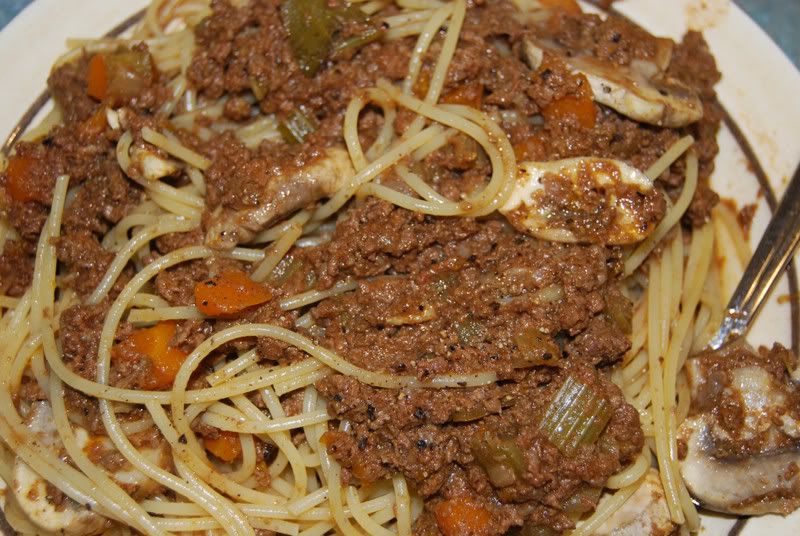
Ingredients:
600 g kangaroo mince
500 mL beef stock
handful of mushrooms of your choosing, sliced
100 g tomato paste
1/3 cup brandy
4 cloves garlic, minced
2 celery sticks, diced
2 chillies, diced
1 carrot, diced
1 large onion, diced
1 1/2 tbs hot curry powder
freshly ground black pepper
sea salt
In a large sauceheat, heat some oil over a low flame. Add the onion, garlic, chillies, celery and carrot. Stir and fry for five minutes, then add a tablespoon of curry powder. Stir and fry for another five minutes, then add the mince. Stir well. Brown the mince over the course of 2-3 minutes, then add the brandy, stirring as you do. Let it reduce, then spoon in the tomato paste. Stir it in, add the stock and cover the pan. Simmer for 1 1/2 hours, stirring occasionally. Remove the lid. Stir in the remaining curry powder. Simmer for a further 25 minutes, then add the mushrooms. Simmer for five more minutes, then cover the pan and take it off the heat. Let it sit this way while you bring some lightly salted water to the boil and cook some spaghetti. Don't cook the spaghetti according to packet instructions--use your senses by tasting the pasta when you think it's about done. It should be soft, but have just a little bite to it. Al dente. Toss the pasta and sauce together.
Too, the addition of curry powder. Adding curry powder to a meaty pasta sauce, for me, is a nostalgic thing. My father used to do with his heavily Australianised 'bolognese' and to this day I can remember the smell of the stuff wafting through the house on the one evening a month or so he'd be in the kitchen.

Ingredients:
600 g kangaroo mince
500 mL beef stock
handful of mushrooms of your choosing, sliced
100 g tomato paste
1/3 cup brandy
4 cloves garlic, minced
2 celery sticks, diced
2 chillies, diced
1 carrot, diced
1 large onion, diced
1 1/2 tbs hot curry powder
freshly ground black pepper
sea salt
In a large sauceheat, heat some oil over a low flame. Add the onion, garlic, chillies, celery and carrot. Stir and fry for five minutes, then add a tablespoon of curry powder. Stir and fry for another five minutes, then add the mince. Stir well. Brown the mince over the course of 2-3 minutes, then add the brandy, stirring as you do. Let it reduce, then spoon in the tomato paste. Stir it in, add the stock and cover the pan. Simmer for 1 1/2 hours, stirring occasionally. Remove the lid. Stir in the remaining curry powder. Simmer for a further 25 minutes, then add the mushrooms. Simmer for five more minutes, then cover the pan and take it off the heat. Let it sit this way while you bring some lightly salted water to the boil and cook some spaghetti. Don't cook the spaghetti according to packet instructions--use your senses by tasting the pasta when you think it's about done. It should be soft, but have just a little bite to it. Al dente. Toss the pasta and sauce together.
Wednesday, January 14, 2009
Bolognese sauce
For most Australians, Bolognese sauce contains a single meat product--beef mince. True Bolognese sauce, though, contains at least two. The recipe below was inspired by a recipe I dug up that purported to be as authentic as they come. It contained beef mince, pork mince, sausage, panchetta and ham. Curiously, it didn't have any basil or garlic--ingredients many of us consider very Italian. It was interesting to see how different this recipe was from what I'd grown up with. My dad--not an Italian--regularly made Bolognese with spaghetti. Indeed, it was the only thing he knew how to cook. It was different, even, from some of the more 'modern' versions I've seen whipped up by Maggie Beer and Jamie Oliver. It was interesting, to be sure, but I couldn't help but feel that some of those 'modern' touches were needed. So, off the top of my head, I can tell you that the idea of including a diced chilli comes from Mr. Oliver. I saw him do it and thought, yeah, it needed to be done. The chicken livers came from Maggie Beer. She reckons they add a lot to the flavour and aroma of the sauce and she's right. The veal and beef combo? Well, I'll claim that as my own. Having veal in addition to beef, instead of just beef, adds to the complexity of the flavour of the sauce. Feel free to substitute the 200 g of veal with a further 200 g of beef, though. As for the garlic, well, to me, as a non-Italian, as someone who's grown up on Australianised Bolognese, excluding garlic of all things seems sinful. And the basil? Same thing, really.
The quantities below make for a lot of sauce. Don't worry, this stuff keeps well in the fridge (2-3 days) and freezer (2 months) Indeed, it's even better on the second day.
Ingredients:
250 g pork mince
200 g beef mince
200 g veal mince (substitute with more beef mince if you must)
200 g chicken livers
200 g tomato paste
100 g panchetta, diced
50 g ham, diced
2 cups (500 mL) beef stock
3/4 cup (185 mL) red wine
4 cloves of garlic, diced
3 dried bay leaves, crumbled
2 sticks of celery, diced
1 carrot, diced
1 chilli, diced (seeds removed)
1 Italian pork sausage, roughly chopped
1 onion, diced
handful of fresh basil leaves, roughly chopped
a touch of freshly grated nutmeg
a grind of black pepper
sea salt
In a saucepan, fry the panchetta until crispy. Remove from pan and set aside.
Fry the chicken livers until they've got a bit of colour--perhaps 30 seconds--and then set them aside to cool. When they're cool, roughly chop them.
Give the saucepan a clean, if need be, and then fry the carrot, celery, chilli, garlic and onion until they begin to soften. At this point, add the sausage and mince. Fry until mince has a bit of colour. Return the liver and panchetta to the saucepan.
Add the wine. Stir. Add the tomato paste. Fry for a further 4 minutes, then add the beef stock, along with a little nutmeg, the basil leaves and the bay leaves. When sauce starts to bubble, reduce heat and cover. Simmer for a hour, removing the lid occasionally to stir. When the hour is up, remove the lid. Simmer, stirring occasionally, for a further 30 minutes. Then add the ham. Simmer for 30 more minutes then allow to cool.
If you're planning on making spaghetti Bolognese, heat some of the sauce over a low flame in a saucepan while cooking some spaghetti. The general rule is 80-100 g of pasta per person. Dress with a few basil leaves and a splash of extra virgin olive oil.
The quantities below make for a lot of sauce. Don't worry, this stuff keeps well in the fridge (2-3 days) and freezer (2 months) Indeed, it's even better on the second day.
Ingredients:
250 g pork mince
200 g beef mince
200 g veal mince (substitute with more beef mince if you must)
200 g chicken livers
200 g tomato paste
100 g panchetta, diced
50 g ham, diced
2 cups (500 mL) beef stock
3/4 cup (185 mL) red wine
4 cloves of garlic, diced
3 dried bay leaves, crumbled
2 sticks of celery, diced
1 carrot, diced
1 chilli, diced (seeds removed)
1 Italian pork sausage, roughly chopped
1 onion, diced
handful of fresh basil leaves, roughly chopped
a touch of freshly grated nutmeg
a grind of black pepper
sea salt
In a saucepan, fry the panchetta until crispy. Remove from pan and set aside.
Fry the chicken livers until they've got a bit of colour--perhaps 30 seconds--and then set them aside to cool. When they're cool, roughly chop them.
Give the saucepan a clean, if need be, and then fry the carrot, celery, chilli, garlic and onion until they begin to soften. At this point, add the sausage and mince. Fry until mince has a bit of colour. Return the liver and panchetta to the saucepan.
Add the wine. Stir. Add the tomato paste. Fry for a further 4 minutes, then add the beef stock, along with a little nutmeg, the basil leaves and the bay leaves. When sauce starts to bubble, reduce heat and cover. Simmer for a hour, removing the lid occasionally to stir. When the hour is up, remove the lid. Simmer, stirring occasionally, for a further 30 minutes. Then add the ham. Simmer for 30 more minutes then allow to cool.
If you're planning on making spaghetti Bolognese, heat some of the sauce over a low flame in a saucepan while cooking some spaghetti. The general rule is 80-100 g of pasta per person. Dress with a few basil leaves and a splash of extra virgin olive oil.
Tuesday, January 13, 2009
Buffalo meatballs with a mustard and pepper coating
Ingredients:
500 g buffalo sausages
1/4 cup flour
1 tbs mustard seeds, crushed
1 tsp powdered mustard
1 tsp freshly ground black pepper
1/2 tsp tumeric (optional--I use it purely for the colour)
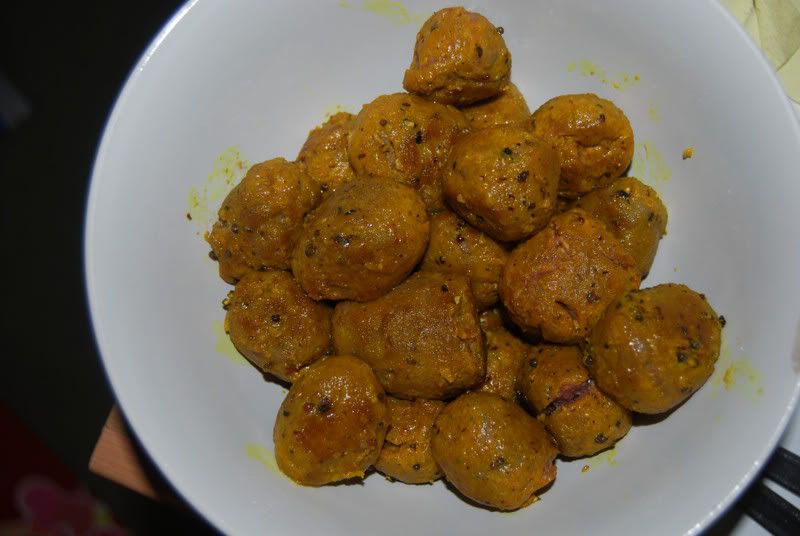
Combine everything but the sausages in a cup or other small vessel. Set aside.
Slit the sausage casings open with a paring knife. Extract the filling. Pull pieces of the filling off and roll into meatballs. Place in a bowl, add the seasoned flour and cover the bowl well with cling film. Shake until meatballs are evenly coated. Fry over a gentle heat until cooked though.
500 g buffalo sausages
1/4 cup flour
1 tbs mustard seeds, crushed
1 tsp powdered mustard
1 tsp freshly ground black pepper
1/2 tsp tumeric (optional--I use it purely for the colour)

Combine everything but the sausages in a cup or other small vessel. Set aside.
Slit the sausage casings open with a paring knife. Extract the filling. Pull pieces of the filling off and roll into meatballs. Place in a bowl, add the seasoned flour and cover the bowl well with cling film. Shake until meatballs are evenly coated. Fry over a gentle heat until cooked though.
Buffalo meatballs with a spicy tomato and whisky dipping sauce
Ingredients:
500 g buffalo sausages
1 cup tomato ketchup
1/4 cup apple cider vinegar
1/4 cup whisky
2 tbs brown sugar
1 tbs Dijon mustard
1 tbs honey mustard
1 tbs sweet paprika
1 tbs chilli powder
1 tsp freshly ground allspice
1 tsp freshly ground cumin
1 tsp garlic powder
1 tsp onion powder
a generous grind of freshly ground black pepper
sea salt, to taste
Combine the tomato ketchup, apple cider, whisky, brown sugar, Dijon mustard, honey mustard, sweet paprika, chilli powder, allspice, cumin, garlic, onion powder, black pepper, sea salt and 1/4 cup of water in a small saucepan. Heat over a low flame until sauce starts to bubble. Simmer for 20 minutes, stirring frequently.
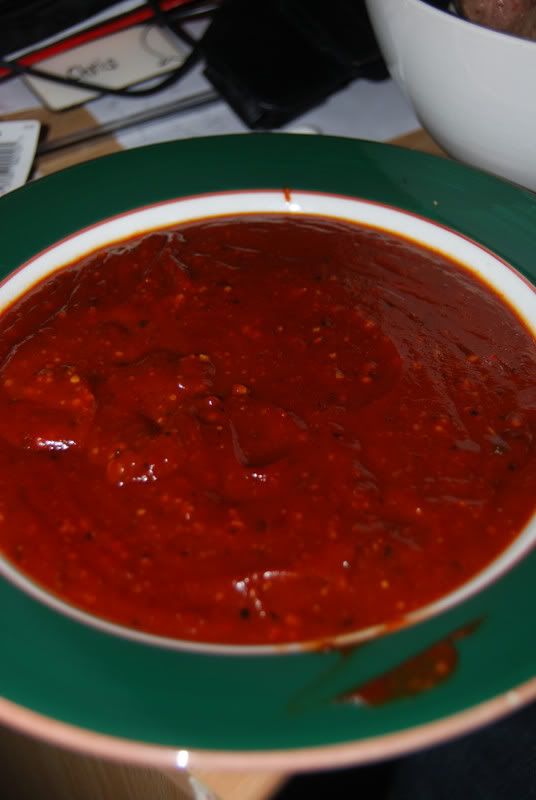
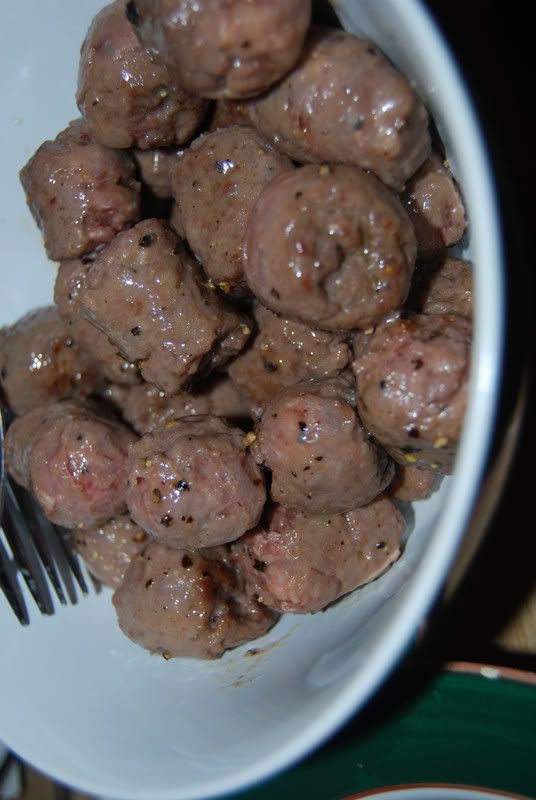
Meanwhile, prepare the meatballs by slitting open the sausage casings with a paring knife. Extract the filling and tear into portions. Roll each portion into a meatball. Fry over medium heat until cooked through.
500 g buffalo sausages
1 cup tomato ketchup
1/4 cup apple cider vinegar
1/4 cup whisky
2 tbs brown sugar
1 tbs Dijon mustard
1 tbs honey mustard
1 tbs sweet paprika
1 tbs chilli powder
1 tsp freshly ground allspice
1 tsp freshly ground cumin
1 tsp garlic powder
1 tsp onion powder
a generous grind of freshly ground black pepper
sea salt, to taste
Combine the tomato ketchup, apple cider, whisky, brown sugar, Dijon mustard, honey mustard, sweet paprika, chilli powder, allspice, cumin, garlic, onion powder, black pepper, sea salt and 1/4 cup of water in a small saucepan. Heat over a low flame until sauce starts to bubble. Simmer for 20 minutes, stirring frequently.

Meanwhile, prepare the meatballs by slitting open the sausage casings with a paring knife. Extract the filling and tear into portions. Roll each portion into a meatball. Fry over medium heat until cooked through.

Saturday, January 10, 2009
Kangaroo steaks with a brandy, mushroom and sour cream sauce
Ingredients:
2 kangaroo steaks
1 clove garlic, finely minced
250 g assorted mushrooms, roughly chopped
200 mL sour cream
30 mL brandy
1 tbs butter, softened
freshly ground black pepper, to taste
sea salt, to taste
olive oil
potato wedges, to serve
Pre-heat oven to 220*C. Pre-heat fry pan over a medium high.
Season the steaks with sea salt. Too, drizzle a little olive oil over them. Fry for a couple of minutes on each side, then transfer pan to oven. Roast for five to six minutes. Return pan to stove over a medium flame. Remove steaks. Add the butter to the pan. When butter has melted, add the garlic and mushrooms. Stir and fry for five minutes, then add the brandy. When brandy has reduced by half, add the sour cream and stir in. Cook for two or three minutes.
2 kangaroo steaks
1 clove garlic, finely minced
250 g assorted mushrooms, roughly chopped
200 mL sour cream
30 mL brandy
1 tbs butter, softened
freshly ground black pepper, to taste
sea salt, to taste
olive oil
potato wedges, to serve
Pre-heat oven to 220*C. Pre-heat fry pan over a medium high.
Season the steaks with sea salt. Too, drizzle a little olive oil over them. Fry for a couple of minutes on each side, then transfer pan to oven. Roast for five to six minutes. Return pan to stove over a medium flame. Remove steaks. Add the butter to the pan. When butter has melted, add the garlic and mushrooms. Stir and fry for five minutes, then add the brandy. When brandy has reduced by half, add the sour cream and stir in. Cook for two or three minutes.
Friday, January 9, 2009
Crispy paprika chicken wings with a garlic and sherry sauce
There's a strong Spanish influence driving this recipe, as demonstrated by the garlic, the paprika and the sherry. I guess you could call it a tapas dish, even.
Ingredients:
1 kilogram chicken wings
200 mL dry sherry
4 garlic cloves, crushed
1 large shallot, diced
1 tbs salt
1 tbs smoked paprika
1 tbs sweet paprika
1 tsp chilli powder
1 tsp freshly ground black pepper
1 tsp freshly ground white pepper
olive oil
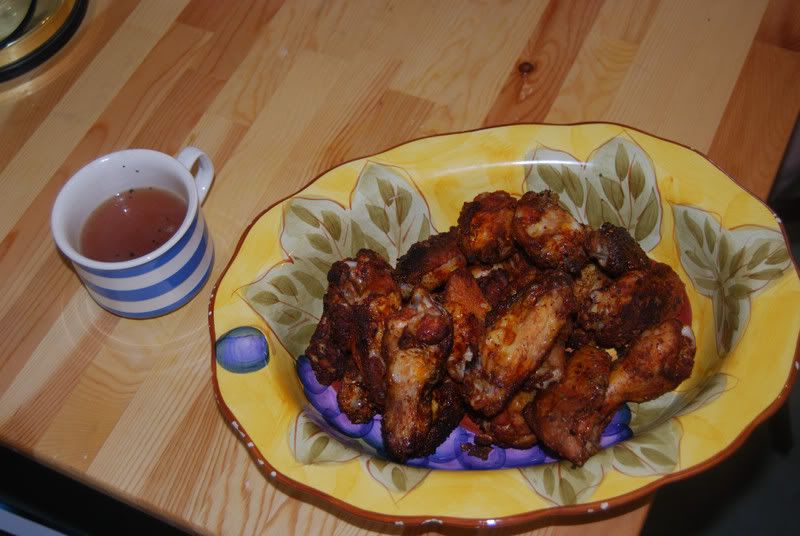
Prepare the chicken wings. Cut the tips off at the joint. Cut the wings into two 'wingettes' at the joint. Place in a bowl with the salt, smoked paprika, sweet paprika, chilli powder, black pepper and white pepper. Cover bowl with a couple of layers of cling film and shake vigourously to distribute the spices evenly. Refrigerate for a few hours or overnight.
Pre-heat the broiler to high. Ensure grill bars are clean. Cook chicken 'wingettes' under the broiler for twenty minutes, turning half way through.
Meanwhile, prepare the garlic and sherry sauce. In a small saucepan, heat some olive oil over a medium flame. Fry the garlic and shallot for ten minutes or until soft, stirring frequently. Add the sherry and stir. Bring to boil. reduce heat slightly and simmer for five minutes.
Ingredients:
1 kilogram chicken wings
200 mL dry sherry
4 garlic cloves, crushed
1 large shallot, diced
1 tbs salt
1 tbs smoked paprika
1 tbs sweet paprika
1 tsp chilli powder
1 tsp freshly ground black pepper
1 tsp freshly ground white pepper
olive oil

Prepare the chicken wings. Cut the tips off at the joint. Cut the wings into two 'wingettes' at the joint. Place in a bowl with the salt, smoked paprika, sweet paprika, chilli powder, black pepper and white pepper. Cover bowl with a couple of layers of cling film and shake vigourously to distribute the spices evenly. Refrigerate for a few hours or overnight.
Pre-heat the broiler to high. Ensure grill bars are clean. Cook chicken 'wingettes' under the broiler for twenty minutes, turning half way through.
Meanwhile, prepare the garlic and sherry sauce. In a small saucepan, heat some olive oil over a medium flame. Fry the garlic and shallot for ten minutes or until soft, stirring frequently. Add the sherry and stir. Bring to boil. reduce heat slightly and simmer for five minutes.
Thursday, January 8, 2009
Roast quail with lime and black pepper
The marinade for this was inspired by a potato chip, of all things. Turns out, lime and pepper go just as well together as lemon and pepper do. This is a very simple, mild-flavoured marinade. You get a hint of lime, but mostly you can taste the quail flesh for what it is.
1 quail, wings and neck removed
2 limes, juiced with a single wedge retained
freshly ground black pepper
sea salt
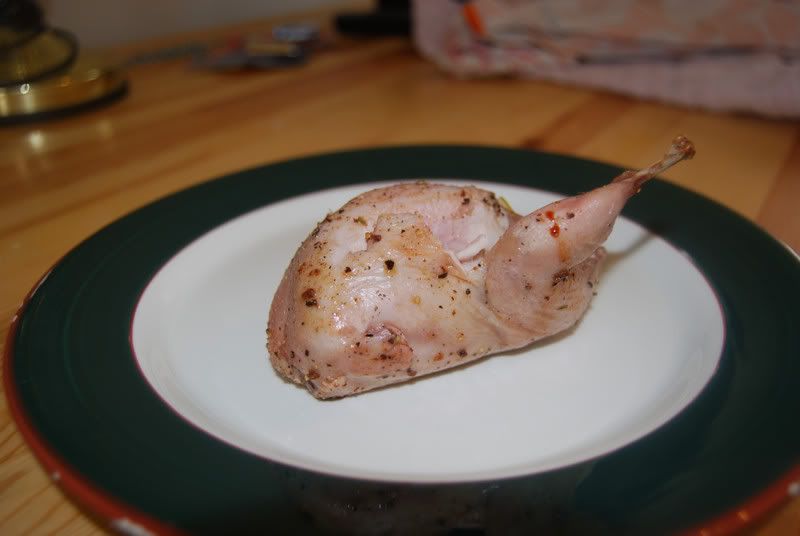
Place the quail in a bowl. Grind some black pepper and sea salt all over it. Rub some into the cavity, too. Squeeze lime juice all over the bird. Turn it breast down, so the breasts--where most of the meat is--are soaking in the lime juice. Cover with cling film and keep in the fridge for a couple of hours.
Pre-heat the oven to 180*C. Place the quail on a lightly oiled baking tray and roast for 20 minutes.
1 quail, wings and neck removed
2 limes, juiced with a single wedge retained
freshly ground black pepper
sea salt

Place the quail in a bowl. Grind some black pepper and sea salt all over it. Rub some into the cavity, too. Squeeze lime juice all over the bird. Turn it breast down, so the breasts--where most of the meat is--are soaking in the lime juice. Cover with cling film and keep in the fridge for a couple of hours.
Pre-heat the oven to 180*C. Place the quail on a lightly oiled baking tray and roast for 20 minutes.
Chinese five spice quail with a honey-soy glaze
The recipe below is enough to season a single quail.
Ingredients:
1 quail, wings and neck removed
3 cloves
2 star anise pods
1 cinnamon stick, snapped into shards
1 tbs whole Sichuan peppercorns
1/2 tsp ginger powder
2 tbs honey
1 tsp soy sauce
Pre-heat the oven to 180*C.
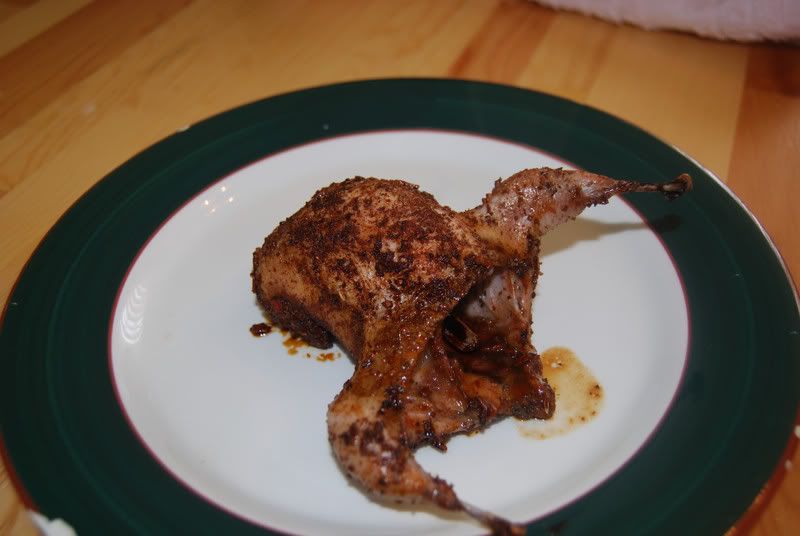
Using a mortar and pestle, grind up two of the cloves, one of the star anise pods, the Sichuan peppercorns, the ginger powder and all but one of the cinnamon shards. Rub this spice mix all over the quail. Stuff the cavity with the remaining clove, star anise pod and cinnamon shard. Place quail on a lightly oiled oven tray and roast for 10 minutes. Meanwhile, combine honey and soy sauce. Remove quail from the oven and baste generously in with the honey-soy glaze, before returning to the oven for a further ten minutes. Serve with steamed rice.
Ingredients:
1 quail, wings and neck removed
3 cloves
2 star anise pods
1 cinnamon stick, snapped into shards
1 tbs whole Sichuan peppercorns
1/2 tsp ginger powder
2 tbs honey
1 tsp soy sauce
Pre-heat the oven to 180*C.

Using a mortar and pestle, grind up two of the cloves, one of the star anise pods, the Sichuan peppercorns, the ginger powder and all but one of the cinnamon shards. Rub this spice mix all over the quail. Stuff the cavity with the remaining clove, star anise pod and cinnamon shard. Place quail on a lightly oiled oven tray and roast for 10 minutes. Meanwhile, combine honey and soy sauce. Remove quail from the oven and baste generously in with the honey-soy glaze, before returning to the oven for a further ten minutes. Serve with steamed rice.
Monday, January 5, 2009
Grilled rabbit with a 'Thai' marinade
Barbecued rabbit is one of my favourite, favourite, favourite things. Cooking rabbit over coals, that's really the best way to prepare it so far as I'm concerned. Put aside any prejudice you may have against eating bunny and give it a go some time.
This recipe was inspired by a recipe in the Jamie Oliver cookbook, Jamie's Italy. He barbecues rabbit with a marinade that includes, among other things, honey. It was okay, but I didn't enjoy it anywhere near as much as the marinade I came up with when first barbecuing rabbit for the kids at Saturday school. My students have since tried both marinades and agree that mine is better. Could just be that we all dig the coriander. This is definitely a recipe that you should experiment with. Probably, with not too much work, you can come up with a marinade that's better than mine. I reckon some sort of jerk seasoning, like the one I used with the pork, could be great.
1 rabbit, chopped up into serving pieces (don't be too fussy about how you cut it up--we're cooking over a fire, here, not in a laboratory)
1/4 cup vegetable oil
6 cloves garlic, peeled
4 limes or kaffir limes, juiced with a little zest retained to go into the marinade
3-4 sprigs coriander
2 small red chillies
small lump of ginger
2 tbs brown sugar
2 tbs freshly ground Sichuan peppercorns, plus a little extra
1 tbs freshly ground coriander
1 tbs sea salt, plus a little extra
1-2 tsp Thai fish sauce, depending on taste
steamed rice, to serve
Combine the oil, garlic, lime juice, lime zest, fresh coriander, chillies, ginger, brown sugar, Sichuan pepper, ground coriander, sea salt and fish sauce in a food processor. Blitz until you end up with a paste. Place the rabbit pieces in a non-metallic bowl and pour the marinade over them. Marinate for a few hours, at least. Ideally overnight.
Remove rabbit from fridge. Start a coal fire. You can do this on a gas barbecue--I have a couple of times--but really, it's so much better when cooked slowly over smouldering coals. Let the fire burn down. Ensure the grill bars are clean. Remove the rabbit pieces from the marinade and give them a generous sprinkle of both sea salt and freshly ground Sichuan pepper. Place the thickest parts of the rabbit, such as the rear legs, on the fire first, as these will take the longest to cook. As cooking over a coal fire is an inexact science, the cooking time could be anywhere between 20 and 40 minutes for the thickest pieces. Don't be tempted to cook this over a high heat. Be patient. Be sure to turn the rabbit pieces regularly, basting with the excess marinade as you do.
This recipe was inspired by a recipe in the Jamie Oliver cookbook, Jamie's Italy. He barbecues rabbit with a marinade that includes, among other things, honey. It was okay, but I didn't enjoy it anywhere near as much as the marinade I came up with when first barbecuing rabbit for the kids at Saturday school. My students have since tried both marinades and agree that mine is better. Could just be that we all dig the coriander. This is definitely a recipe that you should experiment with. Probably, with not too much work, you can come up with a marinade that's better than mine. I reckon some sort of jerk seasoning, like the one I used with the pork, could be great.
1 rabbit, chopped up into serving pieces (don't be too fussy about how you cut it up--we're cooking over a fire, here, not in a laboratory)
1/4 cup vegetable oil
6 cloves garlic, peeled
4 limes or kaffir limes, juiced with a little zest retained to go into the marinade
3-4 sprigs coriander
2 small red chillies
small lump of ginger
2 tbs brown sugar
2 tbs freshly ground Sichuan peppercorns, plus a little extra
1 tbs freshly ground coriander
1 tbs sea salt, plus a little extra
1-2 tsp Thai fish sauce, depending on taste
steamed rice, to serve
Combine the oil, garlic, lime juice, lime zest, fresh coriander, chillies, ginger, brown sugar, Sichuan pepper, ground coriander, sea salt and fish sauce in a food processor. Blitz until you end up with a paste. Place the rabbit pieces in a non-metallic bowl and pour the marinade over them. Marinate for a few hours, at least. Ideally overnight.
Remove rabbit from fridge. Start a coal fire. You can do this on a gas barbecue--I have a couple of times--but really, it's so much better when cooked slowly over smouldering coals. Let the fire burn down. Ensure the grill bars are clean. Remove the rabbit pieces from the marinade and give them a generous sprinkle of both sea salt and freshly ground Sichuan pepper. Place the thickest parts of the rabbit, such as the rear legs, on the fire first, as these will take the longest to cook. As cooking over a coal fire is an inexact science, the cooking time could be anywhere between 20 and 40 minutes for the thickest pieces. Don't be tempted to cook this over a high heat. Be patient. Be sure to turn the rabbit pieces regularly, basting with the excess marinade as you do.
Sunday, January 4, 2009
Kangaroo with pepper sauce
Kangaroo deserves to be more widely consumed. It's accessible--most supermarkets I've seen stock it--and it's lean and it's delicious. It's relatively affordable, too. Sure, it's gone up in price lately, but is it as cheap as steak? Well, no. Not really. Not for steak that's actually good. Rubbish two-star supermarket steak doesn't count. Kangaroo is another meat that people can be a little worried about preparing. It has a bad reputation. Overcook it and it'll dry out due to its leanness. The solution? Don't overcook it. Kangaroo has a very strong flavour--stronger than venison, even--and that's swell, really, as it means it stands up nicely to strong-flavoured sauces and rubs like this one, which combines three varieties of peppercorn. Speaking of which, you're not aiming to grind the peppercorns into a powder. For this, simply cracking them is enough. When fried, the steaks will have a crunchy, peppery crust.
Ingredients:
4 kangaroo steaks
1/2 cup beef or veal stock (either home made or good quality store-bought stuff)
1 tbs freshly crushed black peppercorns
1 tbs freshly crushed green peppercorns
1 tbs freshly crushed white peppercorns
1 tbs sea salt
a shot of brandy (or cognac or cheap whisky)
olive oil
5 tiny knobs of butter, softened
Rub a little olive oil into the surface of each steak, along with the salt and the cracked peppercorns. Retain any excess peppercorns--you can add them to the sauce at the end.
Pre-heat the pan to medium high. Place the steaks in the pan and fry for 3-4 minutes a side, depending on their thickness and how long they've been out of the fridge. When you turn them, spoon a knob of butter over each one. Once the steaks are cooked, place them on a plate and leave in a warm place. Immediately add the excess peppercorns and the shot of brandy to the pan. Careful, here. If the pan's hot enough, the alcohol could flame up, setting your curtains and/or you on fire. Stir with a wooden spoon while the alcohol reduces. Once it has reduced, add the stock. Once that's reduced by at least half, add the final knob of butter and cut the heat. Stir the butter in and spoon the sauce over the steaks.
Ingredients:
4 kangaroo steaks
1/2 cup beef or veal stock (either home made or good quality store-bought stuff)
1 tbs freshly crushed black peppercorns
1 tbs freshly crushed green peppercorns
1 tbs freshly crushed white peppercorns
1 tbs sea salt
a shot of brandy (or cognac or cheap whisky)
olive oil
5 tiny knobs of butter, softened
Rub a little olive oil into the surface of each steak, along with the salt and the cracked peppercorns. Retain any excess peppercorns--you can add them to the sauce at the end.
Pre-heat the pan to medium high. Place the steaks in the pan and fry for 3-4 minutes a side, depending on their thickness and how long they've been out of the fridge. When you turn them, spoon a knob of butter over each one. Once the steaks are cooked, place them on a plate and leave in a warm place. Immediately add the excess peppercorns and the shot of brandy to the pan. Careful, here. If the pan's hot enough, the alcohol could flame up, setting your curtains and/or you on fire. Stir with a wooden spoon while the alcohol reduces. Once it has reduced, add the stock. Once that's reduced by at least half, add the final knob of butter and cut the heat. Stir the butter in and spoon the sauce over the steaks.
Emu meatballs with a red wine dipping sauce

When I cooked emu for my students, once again I worked with the sausages. Emu has a strong, meaty taste. It stands up well to all of the sauces typically paired with red meats, including red wine jus. Emu sausages can be ordered in most butchers and poultry stores. If you're serving emu as a sit down dinner, it might be more appropriate to order a fan fillet. If you're serving the meatballs at some kind of function, though, simply jam a toothpick into each meat ball.
Ingredients:
1 kilogram emu sausages
3/4 cup red wine
1/4 cup beef or veal stock (either home made or quality store-bought stuff)
6 tbs unsalted butter, softened
2 shallots, finely diced
2 cloves garlic, crushed and minced
sea salt, to taste
freshly ground black pepper, to taste
Using a paring knife, slit sausages open and extract meat. Take a pinch of meat in your fingers and roll it into a ball. Season with salt and pepper, then repeat the process until you've used all the meat. Fry meatballs over a medium heat for 5-8 minutes or until cooked through.
Heat a tablespoon of butter in a fry pan. When hot, add shallots and garlic. Stir until soft and then add the red wine and stock. When the red wine and stock mixture starts to boil, drop the temperature and allow to simmer for a good 15-20 minutes. The volume should reduce by half, if not more. When wine and stock have reduced, whisk in the remaining butter a tablespoon at a time. Season with salt and pepper and remove from heat.
Buffalo meatballs with a spicy coating
This is a simple recipe I came up with when introducing both my students and myself to buffalo. I wanted something simple, something the kids and I could knock together in the space of a few minutes. I ended up settling on a spice rub. You can use this spice rub on buffalo steaks, but we used it on meatballs made from buffalo sausages. The sausages can be ordered at any good butcher or poultry store, although you'll find some places might have them kicking around the freezer already. The sausages, at least at the places I go, come frozen in a one kilogram pack.
1 kilogram pack buffalo sausages, thawed
1/4 cup plain flour
1 tbs sweet paprika
1 tbs allspice
1 tbs black pepper
1 tbs sea salt
1 tsp white pepper
1 tsp chilli powder
Use a paring knife to slit the sausages open. Peel the skin away from the meat. Take a pinch of meat and roll it into a meatball with your hands. Repeat until all of the sausages are gone.
In a cup or other small vessel, combine the flour and spices. Dip the meatballs into the seasoned flour one by one, rolling them around to ensure they get an even coating.
Heat some oil in a fry pan. Cook the meatballs over a medium flame for 5-8 minutes.
1 kilogram pack buffalo sausages, thawed
1/4 cup plain flour
1 tbs sweet paprika
1 tbs allspice
1 tbs black pepper
1 tbs sea salt
1 tsp white pepper
1 tsp chilli powder
Use a paring knife to slit the sausages open. Peel the skin away from the meat. Take a pinch of meat and roll it into a meatball with your hands. Repeat until all of the sausages are gone.
In a cup or other small vessel, combine the flour and spices. Dip the meatballs into the seasoned flour one by one, rolling them around to ensure they get an even coating.
Heat some oil in a fry pan. Cook the meatballs over a medium flame for 5-8 minutes.
Pork belly with an oriental marinade

I love, love, love pork belly. It's fatty, it's cheap, it's really lovely sliced up and cooked over a coal fire. My favourite cut of the pig, easy.
1 kilogram slab pork belly
stick of lemongrass
two or three spring onions
a small lump of ginger
three or four garlic cloves, peeled
rice wine (I used some cheap Korean sake I had kicking around, but the stuff that's sold specially for cooking would work equally well)
a few springs of fresh coriander (cilantro)
ground Sichuan pepper, to taste
ground coriander seeds, to taste
sea salt, to taste
Throw all the dry ingredients into a food processor and blitz. Gradually add the rice wine until you form a paste. Set aside to let the flavours develop. Use a paring knife to make shallow incisions all over the pork belly before cutting it into small strips. Rub the marinade into the pork belly, cover with cling film and keep in the refrigerator until a hour before cooking.
Cook under the broiler or over a coal fire. Cook over a medium and even heat until done.
Tips and ideas:
Try adding some citrus--perhaps kaffir lime--to the marinade. Use both the zest and the juice.

Subscribe to:
Posts (Atom)

 Posts
Posts

