This represents my third attempt at sausage-making. The results weren't brilliant, but they were definitely acceptable. I wouldn't be pissed off if I'd paid for these, is the point. The muscat was a bright idea I had half way through making the sausages. I was originally aiming for a 'barbecue beef' sausage--thus the choice in spices.
Before hanging sausages, you need to twist them into individual sausages, right? Sounds like a challenge, but it's quite easy once you get the hang of it. Personally, I find it easiest to work in metre lengths. I take great care not to overfill the casings and then, when I have a metre-long sausage, I cut it. I fold the metre long sausages in half and then twist the two halves together, starting from the top, about 15 cm from the initial fold. I then feed one of the ends through the hole and repeat the process. Don't simply twist them together, as they'll come undone the moment you let go. It's very important to feed the one of the ends through the hole you just made.
Finally, a word on hanging. I form the twisted sausages into a bundle and then tie food-safe string to them. I place the whole lot in a plastic bag. I tie the other end of the string to a small object--a piece of cutlery would do the job--and then lift up the second last shelf of the fridge. I feed the string in so the small object sits on top of the shelf and the bag of sausages is hanging underneath. I tried using plastic hooks attached to the bottom of the second shelf, but found they didn't have enough strength in their sticky backing.
1 kg chuck steak, trimmed of excess fat and sinew, cut into small strips
500 g pork fat, cut into small strips
natural casings, re-hydrated
a very generous splash of muscat (substitute port or sherry or about anything else)
2 tsp salt
a generous pinch of paprika
a generous pinch of freshly ground black pepper
a generous pinch of thyme
Use the coarsest setting of the mincer to grind up the chuck and pork fat. Combine with the spices and muscat in a bowl and refrigerate until cold. Run the whole lot through the mincer again, this time on the finest setting. Feed into sausage casings. Hand overnight.
Showing posts with label meat. Show all posts
Showing posts with label meat. Show all posts
Wednesday, February 25, 2009

Saturday, February 21, 2009
My first attempts at making sausages
Picked up a new toy yesterday--something the packaging calls a multi-purpose 'food turner'. Essentially, it's a pasta machine and a mincer. I already have a pasta machine--never used it, of course--so I'm not particularly interested in the former, but the latter? Can see myself having a whole lot of fun with that.
When I got it home, I sterilised all the components in boiling water and set to work. I had a kilo of boneless pork belly and I minced it up with some salt, pepper and freshly ground fennel seeds. I worked it into some collagen casings and then fried them up. Was I happy with the result? No. The sausages burst. Collagen casings, it seems, aren't the slightest bit forgiving to the sausage maker who dares overstuff his sausages. They were dry as all hell, too.
I took the sausage maker into Saturday school today with the intent of having the kids make sausages. I was right in assuming it'd be right in their collective happy zone, something they'd all go nuts over--turning the crank, forcing the meat into casings, barbecuing or frying them up. To keep it cheap, I went for mutton. You could do these with lamb, though. I also put in some pork fat, to lube them up some. And salt and pepper and curry powder and garlic and onion. The results? Better. Not brilliant, but significantly better. The kids enjoyed them and, yeah, I've had plenty of sausages that were nowhere near as good as these in my lifetime, but there's still a lot of work to be done. Keep that in mind if attempting my recipe.
So yeah, the results. Okay. But still not great. I know why, though, after speaking to a local butcher.
Dryness
Dryness wasn't an issue with the second batch, but the first? Yeah. Big issue. Even though I'd used really fatty meat. The butcher said for maybe a kilogram of meat, he adds about a half cup of very cold (we're talking close to freezing here) water to the mix. Some of it will drain out later.
Casings
Collagen casings work, yeah, but they're hard to tie and they're prone to bursting. Go for the natural casings. That is, pig intestines (you can also get beef and lamb intestines). You'll have to order them 2-3 days in advance, probably, and buy a decent quantity, but that's not a problem. The butcher I go to? He's getting me a bag of casings that'll allow me to make 80-100 kg of sausages. Sounds ridiculous, but the casings are salted. They last forever. All you need to do is take the desired length (which is apparently a bit tricky) and soak it for a while.
Fresh garlic and onion
Okay, if you're planning on cooking your sausages shortly after you make them, using fresh veg isn't a problem. But point is, fresh veg significantly reduces the shelf life of your sausages.
Hanging
Sausages shouldn't be cooked right away. No, they're too fresh, according to the butcher. They're edible, I mean. The results will still be okay if you've done everything else right. But for best results, you should hang them overnight. To do this, keep them in a bundle and hang them in the fridge from a hook. Just remove a shelf or adjust the shelves so you have a large space at the bottom of the fridge. Use one of those hooks with a sticky backing. Hang them either inside a large plastic bag or over a plate, as the excess juices and water will drain out. Unless you have a dedicated fridge, this aspect of the sausage making process will limit the amount of sausages you can output in a single session. There's no point in running 10 kg of meat through your mincer if you only have room in the fridge to hang a couple of kilograms of sausages.
When I got it home, I sterilised all the components in boiling water and set to work. I had a kilo of boneless pork belly and I minced it up with some salt, pepper and freshly ground fennel seeds. I worked it into some collagen casings and then fried them up. Was I happy with the result? No. The sausages burst. Collagen casings, it seems, aren't the slightest bit forgiving to the sausage maker who dares overstuff his sausages. They were dry as all hell, too.
I took the sausage maker into Saturday school today with the intent of having the kids make sausages. I was right in assuming it'd be right in their collective happy zone, something they'd all go nuts over--turning the crank, forcing the meat into casings, barbecuing or frying them up. To keep it cheap, I went for mutton. You could do these with lamb, though. I also put in some pork fat, to lube them up some. And salt and pepper and curry powder and garlic and onion. The results? Better. Not brilliant, but significantly better. The kids enjoyed them and, yeah, I've had plenty of sausages that were nowhere near as good as these in my lifetime, but there's still a lot of work to be done. Keep that in mind if attempting my recipe.
Ingredients:
1 kg mutton, chopped into small cubes
250 g pork fat, chopped into small cubes
collagen casings
4 cloves garlic, minced
1/2 small onion, finely diced
1 tbs curry powder
a good splash of cold water
sea salt
freshly ground black pepper
Mince the mutton and pork fat and transfer to a bowl. Combine with garlic, onion, water, curry powder, sea salt and freshly ground black pepper. Place a handful of the mince at a time into sausage stuffer (which, in my case, is the same device that minced the meat in the first place, just with a different attachment screwed in).
So yeah, the results. Okay. But still not great. I know why, though, after speaking to a local butcher.
Dryness
Dryness wasn't an issue with the second batch, but the first? Yeah. Big issue. Even though I'd used really fatty meat. The butcher said for maybe a kilogram of meat, he adds about a half cup of very cold (we're talking close to freezing here) water to the mix. Some of it will drain out later.
Casings
Collagen casings work, yeah, but they're hard to tie and they're prone to bursting. Go for the natural casings. That is, pig intestines (you can also get beef and lamb intestines). You'll have to order them 2-3 days in advance, probably, and buy a decent quantity, but that's not a problem. The butcher I go to? He's getting me a bag of casings that'll allow me to make 80-100 kg of sausages. Sounds ridiculous, but the casings are salted. They last forever. All you need to do is take the desired length (which is apparently a bit tricky) and soak it for a while.
Fresh garlic and onion
Okay, if you're planning on cooking your sausages shortly after you make them, using fresh veg isn't a problem. But point is, fresh veg significantly reduces the shelf life of your sausages.
Hanging
Sausages shouldn't be cooked right away. No, they're too fresh, according to the butcher. They're edible, I mean. The results will still be okay if you've done everything else right. But for best results, you should hang them overnight. To do this, keep them in a bundle and hang them in the fridge from a hook. Just remove a shelf or adjust the shelves so you have a large space at the bottom of the fridge. Use one of those hooks with a sticky backing. Hang them either inside a large plastic bag or over a plate, as the excess juices and water will drain out. Unless you have a dedicated fridge, this aspect of the sausage making process will limit the amount of sausages you can output in a single session. There's no point in running 10 kg of meat through your mincer if you only have room in the fridge to hang a couple of kilograms of sausages.
Saturday, February 14, 2009
Rabbit pie
Ingredients:
600 g rabbit mince
500 mL rabbit or chicken stock
5 frozen short crust pastry sheets
1 large onion, sliced
4 cloves garlic, minced
2 chillies, diced
1 piece ginger, sliced
1 egg, beaten
1/2 stick lemon grass, sliced
1/2 lemon, juiced
1 tbs coriander seeds, roasted and then ground
1 tbs shrimp paste
2 tsp brown sugar
1 tsp fish sauce
1 tsp turmeric powder
pinch of flour
splash of rice wine (i.e. sake)
generous pinch of sesame seeds
freshly ground black pepper
sea salt
peanut oil
chilli sauce (optional)
Over a low flame, heat some peanut oil in a large saucepan. Add ginger, garlic, onion and lemon grass. When soft, add coriander and turmeric. Stir and fry for a minute, then add the rabbit mince, fish sauce and shrimp paste. Give the mince some colour and then deglaze the saucepan with a splash of rice wine. Add the sugar, flour and stock. Cover and simmer for a hour. Season with freshly ground black pepper, sea salt and, if desired, chilli sauce. Remove from heat and allow to cool.
Thaw pastry. Work into three oven proof ramekins. Trim away excess pastry. If there are any tears, use the off-cuts to patch them up. Ladle the cooled filling into pastry-lined ramekins. Brush some beaten egg around the rim of each pie. Lay another sheet of pastry on top. Trim away excess again. Poke a few holes in the lid of each pie, then brush some egg on top. Sprinkle with sea salt, freshly ground black pepper and sesame seeds. Bake at 180*C for 45-50 minutes.
600 g rabbit mince
500 mL rabbit or chicken stock
5 frozen short crust pastry sheets
1 large onion, sliced
4 cloves garlic, minced
2 chillies, diced
1 piece ginger, sliced
1 egg, beaten
1/2 stick lemon grass, sliced
1/2 lemon, juiced
1 tbs coriander seeds, roasted and then ground
1 tbs shrimp paste
2 tsp brown sugar
1 tsp fish sauce
1 tsp turmeric powder
pinch of flour
splash of rice wine (i.e. sake)
generous pinch of sesame seeds
freshly ground black pepper
sea salt
peanut oil
chilli sauce (optional)
Over a low flame, heat some peanut oil in a large saucepan. Add ginger, garlic, onion and lemon grass. When soft, add coriander and turmeric. Stir and fry for a minute, then add the rabbit mince, fish sauce and shrimp paste. Give the mince some colour and then deglaze the saucepan with a splash of rice wine. Add the sugar, flour and stock. Cover and simmer for a hour. Season with freshly ground black pepper, sea salt and, if desired, chilli sauce. Remove from heat and allow to cool.
Thaw pastry. Work into three oven proof ramekins. Trim away excess pastry. If there are any tears, use the off-cuts to patch them up. Ladle the cooled filling into pastry-lined ramekins. Brush some beaten egg around the rim of each pie. Lay another sheet of pastry on top. Trim away excess again. Poke a few holes in the lid of each pie, then brush some egg on top. Sprinkle with sea salt, freshly ground black pepper and sesame seeds. Bake at 180*C for 45-50 minutes.
Wednesday, February 11, 2009
Moroccan lamb
I bought very good lamb for this, but one of the cheapest cuts. I'd advise you do the same. Lamb breast is something you'll have to ask for, probably. And probably the butcher will have to get it in. Put it aside, specially. It's a magnificent cut. Fatty--I'd advise hacking away the excess with a knife if you're braising--and full of flavour. It'd go well in a curry or pie. You could separate the ribs and barbecue it. You could roast it. Could do about anything. Cooking it slowly is best though. Don't worry about not having a cleaver. So long as you have a decent chef's knife--a western one, mind--you should have no problem getting through the bones. They're quite small.
Ingredients:
800 g lamb breast, chopped into chunks
500 mL lamb stock (substitute chicken stock, I guess)
400 g can diced tomatoes
handful dried apricots, roughly chopped
handful pitted dates, chopped
a splash of muscat, port or other sweet, fruit-based alcohol
4 pieces preserved lemon, rinsed and drained
4 cloves garlic, minced
1 onion, sliced
1 small piece ginger, grated
1 tbs tomato paste
2 tsp paprika
1 tsp cumin, ground
1 tsp turmeric, ground
1 tsp coriander, ground
1/2 tsp cinnamon, ground
1/2 tsp chilli powder
2 cardamom pods
sea salt
oil
couscous or rice, to serve
In a saucepan, fry the onion and garlic in a little oil over a medium flame until soft. Add the ginger and spices. Stir for a minute, then add the lamb pieces. Brown all over, deglaze with port/muscat, then stir in the tomato paste. Add the canned tomatoes, stock, preserved lemon and dried fruit. Season with sea salt to taste. Simmer, partially covered, on a very low heat for 90-120 minutes. Be sure to stir well every 10-15 minutes to prevent stuff from sticking to the bottom of the pan.
Ingredients:
800 g lamb breast, chopped into chunks
500 mL lamb stock (substitute chicken stock, I guess)
400 g can diced tomatoes
handful dried apricots, roughly chopped
handful pitted dates, chopped
a splash of muscat, port or other sweet, fruit-based alcohol
4 pieces preserved lemon, rinsed and drained
4 cloves garlic, minced
1 onion, sliced
1 small piece ginger, grated
1 tbs tomato paste
2 tsp paprika
1 tsp cumin, ground
1 tsp turmeric, ground
1 tsp coriander, ground
1/2 tsp cinnamon, ground
1/2 tsp chilli powder
2 cardamom pods
sea salt
oil
couscous or rice, to serve
In a saucepan, fry the onion and garlic in a little oil over a medium flame until soft. Add the ginger and spices. Stir for a minute, then add the lamb pieces. Brown all over, deglaze with port/muscat, then stir in the tomato paste. Add the canned tomatoes, stock, preserved lemon and dried fruit. Season with sea salt to taste. Simmer, partially covered, on a very low heat for 90-120 minutes. Be sure to stir well every 10-15 minutes to prevent stuff from sticking to the bottom of the pan.
Monday, February 9, 2009
Beef and vegetable stew
This is a very simple stew. It came about after I bought some more skirt steak and had the bright idea of experimenting with another of the fortified wines. After much pacing of the relevant section of the bottle shop, I ended up with a bottle of muscat. Never had the stuff before. It's quite sweet, but not overly so. To my taste, at least, it works perfectly in the dish. Feel free to substitute it for a red wine of your choice, though.
Ingredients:
600 g skirt steak, cut into bite-sized chunks
350 mL muscat
250 mL beef stock
2 sticks celery, cut into chunks
1 carrot, peeled and cut into chunks
1 parsnip, peeled and cut into chunks
1 onion, sliced
4 cloves garlic
2 sprigs of thyme
2 bay leaves
2 tbs tomato paste
freshly ground black pepper
sea salt
oil
In a large saucepan, heat some oil over a medium-low flame. Fry celery, garlic and onion for ten minutes, before adding carrot and parsnip. Cook for a further five minutes, then add the beef. Cook for five minutes. Stir in the tomato paste, then add the muscat, stock, thyme and bay leaves. Season with sea salt and freshly ground black pepper, cover, reduce heat and simmer for one and a half hours.
Ingredients:
600 g skirt steak, cut into bite-sized chunks
350 mL muscat
250 mL beef stock
2 sticks celery, cut into chunks
1 carrot, peeled and cut into chunks
1 parsnip, peeled and cut into chunks
1 onion, sliced
4 cloves garlic
2 sprigs of thyme
2 bay leaves
2 tbs tomato paste
freshly ground black pepper
sea salt
oil
In a large saucepan, heat some oil over a medium-low flame. Fry celery, garlic and onion for ten minutes, before adding carrot and parsnip. Cook for a further five minutes, then add the beef. Cook for five minutes. Stir in the tomato paste, then add the muscat, stock, thyme and bay leaves. Season with sea salt and freshly ground black pepper, cover, reduce heat and simmer for one and a half hours.
Sunday, February 8, 2009
Beef and stout pie
Ingredients:
400 g beef skirt or chuck steak, diced
375 mL stout (I used Guinness Extra Stout)
60 mL beef stock
2 tomatoes, diced
1 onion, sliced
2 cloves garlic, minced
2 tsp curry powder
freshly ground black pepper
sea salt
a pinch of flour
a splash of Worcester sauce
a splash of Tabasco sauce
2 sheets puff pastry
2 sheets short crust pastry
1 egg, beaten
a splash of milk
oil
Once cool, pre-heat the oven to 190*C.
Fry the onion and garlic in oil in a saucepan over a low flame until soft. Add curry powder and then, a second later, add the tomato. When tomato is soft, add the beef. Seal on all sides, then add the stout and stock. Season with freshly ground black pepper, sea salt, Tabasco and Worcester. Stir in a pinch of flour. Cover and simmer for 90 minutes. Remove from heat and uncover. Allow to cool.
Line two ramekins with the short crust pastry. Be gentle. Cut away the excess. Spoon in the cooled filling until it is level with the top of the ramekin. Brush the edge of the pastry with a little beaten egg, then lay the puff pastry on top. Prick four holes in the puff pastry. Add the milk to the remaining egg and lightly brush it over the puff pastry. Sprinkle a few poppy seeds on top; Bake until puff pastry is golden and, well, puffy. About 30-40 minutes.
400 g beef skirt or chuck steak, diced
375 mL stout (I used Guinness Extra Stout)
60 mL beef stock
2 tomatoes, diced
1 onion, sliced
2 cloves garlic, minced
2 tsp curry powder
freshly ground black pepper
sea salt
a pinch of flour
a splash of Worcester sauce
a splash of Tabasco sauce
2 sheets puff pastry
2 sheets short crust pastry
1 egg, beaten
a splash of milk
oil
Once cool, pre-heat the oven to 190*C.
Fry the onion and garlic in oil in a saucepan over a low flame until soft. Add curry powder and then, a second later, add the tomato. When tomato is soft, add the beef. Seal on all sides, then add the stout and stock. Season with freshly ground black pepper, sea salt, Tabasco and Worcester. Stir in a pinch of flour. Cover and simmer for 90 minutes. Remove from heat and uncover. Allow to cool.
Line two ramekins with the short crust pastry. Be gentle. Cut away the excess. Spoon in the cooled filling until it is level with the top of the ramekin. Brush the edge of the pastry with a little beaten egg, then lay the puff pastry on top. Prick four holes in the puff pastry. Add the milk to the remaining egg and lightly brush it over the puff pastry. Sprinkle a few poppy seeds on top; Bake until puff pastry is golden and, well, puffy. About 30-40 minutes.
Thursday, February 5, 2009
Authentic tacos
Ingredients:
400 g skirt steak
6 soft tortillas
2 limes, juiced
2 tomatoes, diced
1 red onion, diced
1 clove garlic, very finely minced
1 bunch coriander, leaves picked
1 jalapeno, de-seeded, diced
1/2 cucumber, peeled, de-seeded and diced
2 tsp cumin seeds, ground
freshly ground white pepper
sea salt
peanut oil
Season steak all over with sea salt, freshly ground white pepper and cumin. Set aside for a half hour to come up to room temperature. Drizzle a little peanut oil over one side.
Pre-heat a fry pan over high flame. Cook steak, oiled side down, for one minute. Turn. Cook for a further minute. Drop heat to low. Cook for a minute. Turn and cook for a final minute, then set aside. Rest steak while you prepare the vegetables.
In a bowl, toss together the tomato, onion, garlic, coriander leaves, jalapeno and cucumber. Add the lime juice and a pinch of sea salt.
Warm tortillas according to packet instructions.
Slice the steak into small strips.
Fill tortilllas with steak and vegetables. Don't overfill, otherwise it'll go everywhere when you try and eat it.
400 g skirt steak
6 soft tortillas
2 limes, juiced
2 tomatoes, diced
1 red onion, diced
1 clove garlic, very finely minced
1 bunch coriander, leaves picked
1 jalapeno, de-seeded, diced
1/2 cucumber, peeled, de-seeded and diced
2 tsp cumin seeds, ground
freshly ground white pepper
sea salt
peanut oil
Season steak all over with sea salt, freshly ground white pepper and cumin. Set aside for a half hour to come up to room temperature. Drizzle a little peanut oil over one side.
Pre-heat a fry pan over high flame. Cook steak, oiled side down, for one minute. Turn. Cook for a further minute. Drop heat to low. Cook for a minute. Turn and cook for a final minute, then set aside. Rest steak while you prepare the vegetables.
In a bowl, toss together the tomato, onion, garlic, coriander leaves, jalapeno and cucumber. Add the lime juice and a pinch of sea salt.
Warm tortillas according to packet instructions.
Slice the steak into small strips.
Fill tortilllas with steak and vegetables. Don't overfill, otherwise it'll go everywhere when you try and eat it.
Wednesday, February 4, 2009
Pork chops with a bourbon and Cajun spice coating
Ingredients:
4 pork chops
2 tsp white pepper, freshly ground
1 tsp smoked paprika
1 tsp dried basil
1 tsp garlic powder
1 tsp onion flakes
1 tsp salt
1 tsp dried parsley
1 tsp dried thyme
1/2 tsp chilli powder
1/4 tsp cinnamon, ground
a little bourbon
Ensure all spices are very finely ground. Combine in a cup or other small vessel. Add just enough bourbon to form a thick paste. Rub this into the pork. Set aside for a hour. Barbecue or broil until cooked through.
4 pork chops
2 tsp white pepper, freshly ground
1 tsp smoked paprika
1 tsp dried basil
1 tsp garlic powder
1 tsp onion flakes
1 tsp salt
1 tsp dried parsley
1 tsp dried thyme
1/2 tsp chilli powder
1/4 tsp cinnamon, ground
a little bourbon
Ensure all spices are very finely ground. Combine in a cup or other small vessel. Add just enough bourbon to form a thick paste. Rub this into the pork. Set aside for a hour. Barbecue or broil until cooked through.
Tuesday, February 3, 2009
Onion and red wine vinegar sauce for beef, emu, kangaroo or venision
This is a very simple sauce for red meat.
Ingredients:
1 onion, sliced
2 cloves garlic, crushed
2 tbs red wine vinegar
1/2 tsp whole mustard seeds
freshly ground black pepper
sea salt
olive oil
Heat some olive oil in a small fry pan. Add the mustard seeds. When they start to pop, add the onions and garlic. Fry for five minutes, then add the red wine vinegar. Season to taste with freshly ground black pepper and sea salt. Simmer until onions are very soft. Transfer everything into the bowl of a food processor and blitz until smooth. Drain sauce to remove excess liquid and then spoon a small amount next to each piece of meat.
Ingredients:
1 onion, sliced
2 cloves garlic, crushed
2 tbs red wine vinegar
1/2 tsp whole mustard seeds
freshly ground black pepper
sea salt
olive oil
Heat some olive oil in a small fry pan. Add the mustard seeds. When they start to pop, add the onions and garlic. Fry for five minutes, then add the red wine vinegar. Season to taste with freshly ground black pepper and sea salt. Simmer until onions are very soft. Transfer everything into the bowl of a food processor and blitz until smooth. Drain sauce to remove excess liquid and then spoon a small amount next to each piece of meat.
Monday, February 2, 2009
Hot goat curry
Ingredients:
400 g boneless goat meat, diced
4 garlic cloves, sliced
1 onion, sliced
1 piece ginger, sliced
1 tomato, diced
1 bunch coriander
1 tbs black pepper, ground
1 tbs chilli powder
1 tbs coriander seeds, ground
1 tsp turmeric powder
6 cardamom pods, ground
6 cloves, ground
1 star anise, ground
30 mL apple cider vinegar
ghee or oil
hot chilli sauce, to taste
Heat ghee or oil in a small saucepan. Fry onion, garlic and ginger until soft. Add ground spices. Fry for a couple of minutes. Add tomato and about a tablespoon's worth of chopped coriander stems. Fry for five minutes and then add the goat meat. Brown on all sides, then add the apple cider vinegar. Cook for a minute then add 400 mL water. Season with salt and chilli sauce. Simmer for one hour--cover the pan for the first 45 minutes, then remove the lid for the final 15 minutes of cooking. Add coriander leaves for the final 10 minutes.
400 g boneless goat meat, diced
4 garlic cloves, sliced
1 onion, sliced
1 piece ginger, sliced
1 tomato, diced
1 bunch coriander
1 tbs black pepper, ground
1 tbs chilli powder
1 tbs coriander seeds, ground
1 tsp turmeric powder
6 cardamom pods, ground
6 cloves, ground
1 star anise, ground
30 mL apple cider vinegar
ghee or oil
hot chilli sauce, to taste
Heat ghee or oil in a small saucepan. Fry onion, garlic and ginger until soft. Add ground spices. Fry for a couple of minutes. Add tomato and about a tablespoon's worth of chopped coriander stems. Fry for five minutes and then add the goat meat. Brown on all sides, then add the apple cider vinegar. Cook for a minute then add 400 mL water. Season with salt and chilli sauce. Simmer for one hour--cover the pan for the first 45 minutes, then remove the lid for the final 15 minutes of cooking. Add coriander leaves for the final 10 minutes.
Friday, January 30, 2009
Goat kebabs with a spiced sour cream dipping sauce
Here's another recipe for goat kebabs. Again, to get the necessary boneless meat it's best to ask the butcher to bone out a whole leg and dice the remaining meat. Retain the bone for stock.
Ingredients:
200 g boneless goat meat, cut into a 1.5 cm dice
150 g sour cream
2 small chillies
2 cloves garlic, peeled
1/2 onion, cut into quarters with slices separated
a handful of cherry tomatoes, cut in half
2-3 tablespoons of fresh coriander (a mix of leaves and stems)
1 tbs whole cumin seeds, lightly roasted
freshly ground black pepper
sea salt
olive oil
Thread the goat, tomato and onion onto metal skewers (if you only have bamboo ones, you'll need to soak them in water prior to use to prevent burning). Season with freshly ground pepper, sea salt and olive oil. Refrigerate for a hour.
Pre-heat the broiler or barbecue to medium low. Cook the goat kebabs for 20-25 minutes or until cooked through, basting occasionally with a little oil.
Meanwhile, prepare the dipping sauce by blitzing the coriander, chilli, cumin and garlic in a food processor. Whisk in to sour cream. Season to taste with salt and black pepper.
Ingredients:
200 g boneless goat meat, cut into a 1.5 cm dice
150 g sour cream
2 small chillies
2 cloves garlic, peeled
1/2 onion, cut into quarters with slices separated
a handful of cherry tomatoes, cut in half
2-3 tablespoons of fresh coriander (a mix of leaves and stems)
1 tbs whole cumin seeds, lightly roasted
freshly ground black pepper
sea salt
olive oil
Thread the goat, tomato and onion onto metal skewers (if you only have bamboo ones, you'll need to soak them in water prior to use to prevent burning). Season with freshly ground pepper, sea salt and olive oil. Refrigerate for a hour.
Pre-heat the broiler or barbecue to medium low. Cook the goat kebabs for 20-25 minutes or until cooked through, basting occasionally with a little oil.
Meanwhile, prepare the dipping sauce by blitzing the coriander, chilli, cumin and garlic in a food processor. Whisk in to sour cream. Season to taste with salt and black pepper.
Goat kebabs with a sherry and paprika marinade
These are very simple kebabs. You could jazz them up with some fresh herbs, garlic, chilli powder or about anything else. Me, I couldn't really be bothered. I had some sherry I wanted to use up and wanted to do something dramatically different to the other lot of goat kebabs I'm doing today. You can barbecue them, broil them or even roast them. Either way, be careful not to overcook them. Goat meat is quite lean. It won't withstand as much punishment as, say, lamb. And yes, you can make these with lamb if you're unable to source goat. Could use mutton too, I suppose.
To get boneless goat me, I bought a whole goat leg. I asked the butcher to bone it out and cut it into a 1.5 cm dice.
Ingredients:
200 g boneless goat meat, cut into a 1.5 cm dice
125 mL dry sherry (no need to measure it, just eyeball it)
1/2 onion, cut into quarters with slices separated
a handful of cherry tomatoes, cut in half
1 tbs sweet paprika
a generous slash of sherry vinegar
a splash of olive oil
a freshly ground black pepper
sea salt
Thread the meat, tomato and onion onto skewers. If you're using bamboo skewers, you'll have to soak them in water prior to use to prevent burning. Me, I make things easier by using metal skewers. I picked up some nice, long ones for a couple of dollars at the local discount shop. Once the kebabs are prepared, sit them in an oven tray (you can use any tray, really, but I used an oven tray as it was just the right size). Season with black pepper and paprika, then add the sherry, sherry vinegar and olive oil. Cover and refrigerate for a couple of hours at least. Open the cling film every so often to spoon the liquid ingredients over the meat. Just before cooking, sprinkle generously with sea salt.
Cook on or under a medium-low heat for 20-25 minutes, turning and basting frequently with the marinade.
To get boneless goat me, I bought a whole goat leg. I asked the butcher to bone it out and cut it into a 1.5 cm dice.
Ingredients:
200 g boneless goat meat, cut into a 1.5 cm dice
125 mL dry sherry (no need to measure it, just eyeball it)
1/2 onion, cut into quarters with slices separated
a handful of cherry tomatoes, cut in half
1 tbs sweet paprika
a generous slash of sherry vinegar
a splash of olive oil
a freshly ground black pepper
sea salt
Thread the meat, tomato and onion onto skewers. If you're using bamboo skewers, you'll have to soak them in water prior to use to prevent burning. Me, I make things easier by using metal skewers. I picked up some nice, long ones for a couple of dollars at the local discount shop. Once the kebabs are prepared, sit them in an oven tray (you can use any tray, really, but I used an oven tray as it was just the right size). Season with black pepper and paprika, then add the sherry, sherry vinegar and olive oil. Cover and refrigerate for a couple of hours at least. Open the cling film every so often to spoon the liquid ingredients over the meat. Just before cooking, sprinkle generously with sea salt.
Cook on or under a medium-low heat for 20-25 minutes, turning and basting frequently with the marinade.
Thursday, January 22, 2009
Meat and curries
In westernised Thai curries, you'll often see breast and thigh meat used. Or fillet steak. And that's lovely. These curries require thin slices of tender cuts as they cook in a short time. For other curries, though, forget these premium cuts. Go for the cheap, flavoursome cuts like lamb shanks, goat shoulder, chicken marylands (the legs) and chuck steak. These cuts are tough, yes. They are unsuitable for pan-frying, yes. You may be reluctant to use them because a voice in your head is insisting that no, Chris is wrong, the Indians are wrong, the Nepalese are wrong, the South Africans are wrong, that you should use breast instead. Using fillet steak in a beef curry is a waste of money. Meat curries typically take a while to cook. Those cheap and tough cuts of meat tenderise when simmering in a gravy over the course of a hour or two. Too, these bony cuts are gelatinous. As they cook, they thicken the gravy. I know that bony pieces of meat are hard to eat with a fork, so try eating your curry the proper way--with Indian breads. Many cultures worldwide, including the Indians, believe that food eaten with the hands tastes better. I'm not sure about that, but I do know it's much easier to manage to a goat curry if you get your hands in there. The rule of cooking on the bone also applies to seafood. Crabs and lobsters should be cooked in the shell or, if a recipe instructs you to remove the meat from the shell (and it probably shouldn't), you should still throw the shell into the gravy after giving it a quick rinse. Yeah, just like you're making a seafood stock. It'll add a lot of flavour to the gravy.
Finally, marinades. I said you should use tougher cuts of meat. If you want to tenderise these cuts somewhat before cooking, marinate the meat in something acidic like fresh citrus juice. You can also use grated ginger, as it contains an enzyme that will tenderise meat. Some Indians use the pulp of papaya to achieve similar results. You should only marinate the meat for a few hours. Leave it too long and you'll end up making the outer layer of the piece of meat soggy.
Finally, marinades. I said you should use tougher cuts of meat. If you want to tenderise these cuts somewhat before cooking, marinate the meat in something acidic like fresh citrus juice. You can also use grated ginger, as it contains an enzyme that will tenderise meat. Some Indians use the pulp of papaya to achieve similar results. You should only marinate the meat for a few hours. Leave it too long and you'll end up making the outer layer of the piece of meat soggy.
Wednesday, January 21, 2009
A word on game and 'exotic' meats
You've noticed, probably, that a good many of my recipes are for game and 'exotic' meats. And that, too, when I cook with rabbit, I have a preference for wild-shot as opposed to farmed.
Now, I'm no hunter. I have nothing against hunting. Indeed, it's something I'd take up if I had the means. But I do have a certain fondness for game and, of course, for trying new things.
So where does once source all of this stuff? Obviously, with game, if you hunt or know someone who hunts, you have an obvious way of sourcing that's going to be significantly cheaper than what I'm suggesting. Too, what do they taste like?
Boar
Boar has a taste that's similar to pork, but much, much, much stronger. Boar is one of my favourite meats. Your best bet is a stew, casserole or curry.
Be warned: to buy boar is an expensive exercise. A butcher and poultry store me order it in upon request from Wangara Poultry & Game. There are probably other suppliers, though. One of the poultry stores at Queen Victoria Market occasionally stocks boar sausages that are, in my experience, just okay, but realistically you're going to have to order this a week in advance. A good butcher or poultry store should have no problems sourcing boar.
Buffalo
Buffalo really surprised me. I thought it'd be just like beef but it's not. Yes, it's similar to beef, but it's distinct enough to make it worth ordering in once in a while. Buffalo is nowhere near as strong-flavoured as kangaroo or venison, although I admit my experience with it is limited. I've only ever bought the sausages. A local butcher and poultry store can order one kilogram packs of them in through Wangara Poultry & Game. There are probably other suppliers, though. Buffalo works well with dry rubs and bold-flavoured dipping sauces. It's a lean meat, so take care to avoid overcooking it.
Camel
Yes, camel. A lot of people, right now, are probably revolted, but hang on. Camel is lovely. Forget what the beast looks like. Please. It'll be worth it. But yeah, camel. Camel tastes a bit like mutton--that is, strong-flavoured lamb--only with a very unique, sweet aftertaste. It's the sweet aftertaste that makes camel a pain to pair with sauces. Mustard doesn't work. I tried. Yoghurt-based sauces, however, are brilliant. You notice the sweet aftertaste with the steaks more than you do with the sausages. Camel curry would be lovely, but take care with your use of spices. You want spices that compliment, rather than hide, camel's unique flavour.
Camel can be bought in some butchers in the Northern Territory, I believe. I know that the butchers and poultry stores in some fresh produce markets, including Queen Victoria, sell it frozen. If you don't have any luck finding it, though, a good butcher or poultry store will be able to order it in.
Crocodile
Crocodile has a very mild flavour--somewhere between chicken and white-fleshed fish. To be honest, the taste of crocodile is a bit weak to stand up on its own. Try it in curries or as a topping on pizza.
You'll find this in the freezer section of some butchers, fishmongers and poultry stores. It can be pretty expensive. The cheapest place to buy it, usually, oriental-run fishmongers--particularly those that specialise in frozen produce. So far as I know, crocodile is only sold frozen. Unless instructed otherwise, cook from partly frozen. All the liquid you lose if you thaw it prior to cooking it is flavour.
Duck
Duck is rich and flavoursome. Fatty, yes. But that's not a problem unless you're eating it every day or are on a very strict diet. A lot of people won't cook duck because they're paranoid they'll trash it. In reality, cooking duck isn't too hard. If you're roasting it, your best bet is to roast low and slow for a while, then crank up the heat towards the end of the cooking time. If you're pan frying the breasts, you should only pan fry for a few minutes on each side and let the breasts rest on a plate, covered in al foil, in a warm place. The residual heat will cook them all the way through. It's okay to eat duck a little rare. If you're making a Thai-style curry or a stir fry with the breasts or thighs, slice them really thin so they cook quickly.
Sourcing duck is easy. Many poultry stores stock it, some supermarkets have it in their frozen produce aisle and you'll find it at many markets. Chinese supermarkets and Chinese-run butchers often sell it too. That said, I'd advise against the cheap, boiler ducks Chinese supermarkets and butchers sometimes sell. They're probably okay for a soup, but for anything else I'd spend a little more.
There are a few kinds of ducks available, from Muscovy to what's sold as Peking duck.
Emu
Emu has a strong, meaty flavour and stands up well to pretty much any sauce you'd see put with a steak--from green peppercorn sauce to red wine sauce.
Emu can be ordered from good butchers and poultry stores. It's not a cheap meat.
Goat
Tastes like lamb, pretty much. Indeed, you can use goat in most lamb recipes and vice versa. Butchers that stock goat tend to sell it as whole legs, whole shoulders or 'diced' goat, which contains a lot of bones. Sometimes you'll see chops. If you want boneless pieces, ask your butcher to chop up a shoulder. I haven't seen anyone display goat mince, but you can certainly have some goat minced up for you at any butcher that stocks it. Goat works well in curries and roasts.
Goat, thankfully, is a cheap meat. Usually, anyway. Your best bet for finding it is a butcher run by and frequented by South Asians and/or Middle Easterners. As a rule, anywhere that sells halal meat will sell goat.
Kangaroo
Depending on how you cook it, kangaroo can have a very strong, meaty flavour. If you've had a bad experience with kangaroo in the past, I urge you to try it again. Consider cooking it low and slow in a curry or pasta. Slow-cooking kangaroo dampens the smell and flavour somewhat. It still tastes stronger than beef, but it's not as overpowering as a steak that's been pan-fried or barbecued can be to the newcomer. Kangaroo is 98% fat free, making it a very healthy meat. Too, kangaroo is quite cheap. Certainly, it's gone up in recent years and some would argue that much of its appeal is lost now that you can get beef at a similar price, but remember that cheap beef is usually pretty bad.
Kangaroo is the only game meat I've seen at a regular supermarket. It's distributed by a company called Macro Meats and is sold by both Coles and Woolworth's supermarkets. You'll also find it in some independent supermarkets, butchers, fresh produce markets and poultry stores. Butchers, fresh produce markets and poultry stores will sometimes have kangaroo from other suppliers. Macro Meats' kangaroo is the cheapest, in my experience, but they don't seem to have as great a range of cuts as some of the other suppliers.
Quail
Quail has quite a flavour that's quite unique. It's certainly not a strong flavour, but by no means is it mild. And no, quail doesn't taste like chicken. Quail is a bit expensive, but it's nice to have as a treat. Quail can be partially de-boned and barbecued or broiled, or it can be roasted. It can also be cooked in stews and curries. I encourage you to do a lot of experimenting with quail. Quail can withstand a bit of punishment at the hands of the novice cook, but do try and stick to the golden rule of not overcooking stuff.
Quail can be purchased at many butchers and poultry stores.
Rabbit
Both farmed rabbit and wild-shot rabbit can be had from many butchers and poultry stores. It varies considerably in price. Don't pay what seems like a ridiculous sum for it. As a rule, wild-shot rabbit costs less per kilogram (rabbits can be sold on a per kilogram or per unit basis--it depends on the outlet), but have less meat on them and are slightly less tender than farmed rabbits. Wild-shot rabbit tastes superior to farmed rabbit, in my opinion, as it has a noticeably stronger flavour. Farmed rabbit has a chickeny taste. It doesn't taste exactly the same as chicken, but it is quite similar. Rabbit is very versatile. You can roast it or stew it, barbecue or curry it, broil or pan fry it.
Venison
Venison is a lovely meat--lean and full of flavour. When I first had it, it reminded me of very good kangaroo, although the flavour certainly wasn't as strong as kangaroo's. Because of its flavour, venison stands up well to marinades and sauces. Like emu and kangaroo, you can pair venison with about any steak sauce you care to name--from the classics to something you've invented yourself.
Now, the bad news. Venison is usually expensive. I say usually because I've found that, if I'm lucky--if the planets are properly aligned and all, if I've earned some good karma during the previous month--I can get it for a reasonable price at some oriental-run butchers. That's not to say it's as cheap as beef--although the price difference between it and good quality beef isn't significant--but it's nowhere near as bad as the prices butchers will charge you to order it in. If luck isn't on your side, you'll most likely have to order it through a butcher or poultry store. Many cuts of venison are available and you can do many things with them, from roasts to curries to stews to steaks to warm salads.
Now, I'm no hunter. I have nothing against hunting. Indeed, it's something I'd take up if I had the means. But I do have a certain fondness for game and, of course, for trying new things.
So where does once source all of this stuff? Obviously, with game, if you hunt or know someone who hunts, you have an obvious way of sourcing that's going to be significantly cheaper than what I'm suggesting. Too, what do they taste like?
Boar
Boar has a taste that's similar to pork, but much, much, much stronger. Boar is one of my favourite meats. Your best bet is a stew, casserole or curry.
Be warned: to buy boar is an expensive exercise. A butcher and poultry store me order it in upon request from Wangara Poultry & Game. There are probably other suppliers, though. One of the poultry stores at Queen Victoria Market occasionally stocks boar sausages that are, in my experience, just okay, but realistically you're going to have to order this a week in advance. A good butcher or poultry store should have no problems sourcing boar.
Buffalo
Buffalo really surprised me. I thought it'd be just like beef but it's not. Yes, it's similar to beef, but it's distinct enough to make it worth ordering in once in a while. Buffalo is nowhere near as strong-flavoured as kangaroo or venison, although I admit my experience with it is limited. I've only ever bought the sausages. A local butcher and poultry store can order one kilogram packs of them in through Wangara Poultry & Game. There are probably other suppliers, though. Buffalo works well with dry rubs and bold-flavoured dipping sauces. It's a lean meat, so take care to avoid overcooking it.
Camel
Yes, camel. A lot of people, right now, are probably revolted, but hang on. Camel is lovely. Forget what the beast looks like. Please. It'll be worth it. But yeah, camel. Camel tastes a bit like mutton--that is, strong-flavoured lamb--only with a very unique, sweet aftertaste. It's the sweet aftertaste that makes camel a pain to pair with sauces. Mustard doesn't work. I tried. Yoghurt-based sauces, however, are brilliant. You notice the sweet aftertaste with the steaks more than you do with the sausages. Camel curry would be lovely, but take care with your use of spices. You want spices that compliment, rather than hide, camel's unique flavour.
Camel can be bought in some butchers in the Northern Territory, I believe. I know that the butchers and poultry stores in some fresh produce markets, including Queen Victoria, sell it frozen. If you don't have any luck finding it, though, a good butcher or poultry store will be able to order it in.
Crocodile
Crocodile has a very mild flavour--somewhere between chicken and white-fleshed fish. To be honest, the taste of crocodile is a bit weak to stand up on its own. Try it in curries or as a topping on pizza.
You'll find this in the freezer section of some butchers, fishmongers and poultry stores. It can be pretty expensive. The cheapest place to buy it, usually, oriental-run fishmongers--particularly those that specialise in frozen produce. So far as I know, crocodile is only sold frozen. Unless instructed otherwise, cook from partly frozen. All the liquid you lose if you thaw it prior to cooking it is flavour.
Duck
Duck is rich and flavoursome. Fatty, yes. But that's not a problem unless you're eating it every day or are on a very strict diet. A lot of people won't cook duck because they're paranoid they'll trash it. In reality, cooking duck isn't too hard. If you're roasting it, your best bet is to roast low and slow for a while, then crank up the heat towards the end of the cooking time. If you're pan frying the breasts, you should only pan fry for a few minutes on each side and let the breasts rest on a plate, covered in al foil, in a warm place. The residual heat will cook them all the way through. It's okay to eat duck a little rare. If you're making a Thai-style curry or a stir fry with the breasts or thighs, slice them really thin so they cook quickly.
Sourcing duck is easy. Many poultry stores stock it, some supermarkets have it in their frozen produce aisle and you'll find it at many markets. Chinese supermarkets and Chinese-run butchers often sell it too. That said, I'd advise against the cheap, boiler ducks Chinese supermarkets and butchers sometimes sell. They're probably okay for a soup, but for anything else I'd spend a little more.
There are a few kinds of ducks available, from Muscovy to what's sold as Peking duck.
Emu
Emu has a strong, meaty flavour and stands up well to pretty much any sauce you'd see put with a steak--from green peppercorn sauce to red wine sauce.
Emu can be ordered from good butchers and poultry stores. It's not a cheap meat.
Goat
Tastes like lamb, pretty much. Indeed, you can use goat in most lamb recipes and vice versa. Butchers that stock goat tend to sell it as whole legs, whole shoulders or 'diced' goat, which contains a lot of bones. Sometimes you'll see chops. If you want boneless pieces, ask your butcher to chop up a shoulder. I haven't seen anyone display goat mince, but you can certainly have some goat minced up for you at any butcher that stocks it. Goat works well in curries and roasts.
Goat, thankfully, is a cheap meat. Usually, anyway. Your best bet for finding it is a butcher run by and frequented by South Asians and/or Middle Easterners. As a rule, anywhere that sells halal meat will sell goat.
Kangaroo
Depending on how you cook it, kangaroo can have a very strong, meaty flavour. If you've had a bad experience with kangaroo in the past, I urge you to try it again. Consider cooking it low and slow in a curry or pasta. Slow-cooking kangaroo dampens the smell and flavour somewhat. It still tastes stronger than beef, but it's not as overpowering as a steak that's been pan-fried or barbecued can be to the newcomer. Kangaroo is 98% fat free, making it a very healthy meat. Too, kangaroo is quite cheap. Certainly, it's gone up in recent years and some would argue that much of its appeal is lost now that you can get beef at a similar price, but remember that cheap beef is usually pretty bad.
Kangaroo is the only game meat I've seen at a regular supermarket. It's distributed by a company called Macro Meats and is sold by both Coles and Woolworth's supermarkets. You'll also find it in some independent supermarkets, butchers, fresh produce markets and poultry stores. Butchers, fresh produce markets and poultry stores will sometimes have kangaroo from other suppliers. Macro Meats' kangaroo is the cheapest, in my experience, but they don't seem to have as great a range of cuts as some of the other suppliers.
Quail
Quail has quite a flavour that's quite unique. It's certainly not a strong flavour, but by no means is it mild. And no, quail doesn't taste like chicken. Quail is a bit expensive, but it's nice to have as a treat. Quail can be partially de-boned and barbecued or broiled, or it can be roasted. It can also be cooked in stews and curries. I encourage you to do a lot of experimenting with quail. Quail can withstand a bit of punishment at the hands of the novice cook, but do try and stick to the golden rule of not overcooking stuff.
Quail can be purchased at many butchers and poultry stores.
Rabbit
Both farmed rabbit and wild-shot rabbit can be had from many butchers and poultry stores. It varies considerably in price. Don't pay what seems like a ridiculous sum for it. As a rule, wild-shot rabbit costs less per kilogram (rabbits can be sold on a per kilogram or per unit basis--it depends on the outlet), but have less meat on them and are slightly less tender than farmed rabbits. Wild-shot rabbit tastes superior to farmed rabbit, in my opinion, as it has a noticeably stronger flavour. Farmed rabbit has a chickeny taste. It doesn't taste exactly the same as chicken, but it is quite similar. Rabbit is very versatile. You can roast it or stew it, barbecue or curry it, broil or pan fry it.
Venison
Venison is a lovely meat--lean and full of flavour. When I first had it, it reminded me of very good kangaroo, although the flavour certainly wasn't as strong as kangaroo's. Because of its flavour, venison stands up well to marinades and sauces. Like emu and kangaroo, you can pair venison with about any steak sauce you care to name--from the classics to something you've invented yourself.
Now, the bad news. Venison is usually expensive. I say usually because I've found that, if I'm lucky--if the planets are properly aligned and all, if I've earned some good karma during the previous month--I can get it for a reasonable price at some oriental-run butchers. That's not to say it's as cheap as beef--although the price difference between it and good quality beef isn't significant--but it's nowhere near as bad as the prices butchers will charge you to order it in. If luck isn't on your side, you'll most likely have to order it through a butcher or poultry store. Many cuts of venison are available and you can do many things with them, from roasts to curries to stews to steaks to warm salads.
Sunday, January 18, 2009
Curry of goat and vegetables
You could, of course, use lamb for this recipe. But so long as you have access to goat--available at any butcher that seriously caters to folks of South Asian, East African or Caribbean descent--you should try it. It's a lovely meat, similar in flavour to lamb. You could use mutton too, I suppose. Whatever you end up using for the meat, buy on-the-bone. Meat-on-the-bone tastes better and is more fun to eat. What's that? It's hard to eat with a fork? Well, curry wasn't meant to be eaten with a fork!
Ingredients:
500 g diced goat, on-the-bone
1/2 cup plain yoghurt
4 cloves garlic, peeled
4 green cardamon pods
2 sticks of celery, roughly chopped
1 aubergine/eggplant, roughly chopped
1 carrot, roughly chopped
1 onion, cut into chunks
1 tbs chilli powder
1 bunch fresh coriander/cilantro
1 tbs coriander seeds
1 tbs cumin seeds
1 tbs fennel seeds
1 tbs nigella/black cumin
1 tbs turmeric powder
1 tsp fenugreek seeds
1 tsp salt
1 tsp sweet paprika
oil
apple cider vinegar, as necessary
steamed rice, to serve
Coarsely the cardamom pods, coriander seeds, cumin seeds, fennel seeds and fenugreek seeds with a mortar and pestle. Pour into the food processor, along with the onion, garlic and a couple of tablespoons worth of coriander stalks (retain the leaves for later). Blitz, gradually adding apple cider vinegar until a paste forms. How much apple cider vinegar you'll need depends on the size of the onion, the size of the garlic, the direction of the wind, the thickness of your nostril hairs, the position of Saturn in relation to the patch of grass your goat last grazed on and various other factors.
Over a low flame, heat a generous splash of oil in a large saucepan. When oil is hot, add the curry paste and fry for 5 minutes or until it noticeably darkens. Add the pieces of goat and stir so they get covered in the paste. Fry for 5 minutes, ensuring that you keep moving everything around. Otherwise you'll end up with burnt curry paste. Add 3 cups of water, cover the saucepan and cook for 1 hour and 30 minutes, stirring occasionally. At this point, add the aubergine/eggplant, carrot and celery and cook for a further 30 minutes. Remove lid, take off heat and slowly stir in the yoghurt. Garnish with the coriander leaves.
Serve with steamed rice.
Ingredients:
500 g diced goat, on-the-bone
1/2 cup plain yoghurt
4 cloves garlic, peeled
4 green cardamon pods
2 sticks of celery, roughly chopped
1 aubergine/eggplant, roughly chopped
1 carrot, roughly chopped
1 onion, cut into chunks
1 tbs chilli powder
1 bunch fresh coriander/cilantro
1 tbs coriander seeds
1 tbs cumin seeds
1 tbs fennel seeds
1 tbs nigella/black cumin
1 tbs turmeric powder
1 tsp fenugreek seeds
1 tsp salt
1 tsp sweet paprika
oil
apple cider vinegar, as necessary
steamed rice, to serve
Coarsely the cardamom pods, coriander seeds, cumin seeds, fennel seeds and fenugreek seeds with a mortar and pestle. Pour into the food processor, along with the onion, garlic and a couple of tablespoons worth of coriander stalks (retain the leaves for later). Blitz, gradually adding apple cider vinegar until a paste forms. How much apple cider vinegar you'll need depends on the size of the onion, the size of the garlic, the direction of the wind, the thickness of your nostril hairs, the position of Saturn in relation to the patch of grass your goat last grazed on and various other factors.
Over a low flame, heat a generous splash of oil in a large saucepan. When oil is hot, add the curry paste and fry for 5 minutes or until it noticeably darkens. Add the pieces of goat and stir so they get covered in the paste. Fry for 5 minutes, ensuring that you keep moving everything around. Otherwise you'll end up with burnt curry paste. Add 3 cups of water, cover the saucepan and cook for 1 hour and 30 minutes, stirring occasionally. At this point, add the aubergine/eggplant, carrot and celery and cook for a further 30 minutes. Remove lid, take off heat and slowly stir in the yoghurt. Garnish with the coriander leaves.
Serve with steamed rice.
Spaghetti with a spicy kangaroo and mushroom sauce
Kangaroo mince is wonderful. Cheap, lean and tasty. It works well in pasta sauces. You could use it in place of beef in bolognese, if you wanted. This, of course, isn't bolognese. Bolognese--real, honest-to-God bologonese--includes at least two meats. Mine includes four. More if you count the plethora of pig-related products I throw in in addition to the mince.
Too, the addition of curry powder. Adding curry powder to a meaty pasta sauce, for me, is a nostalgic thing. My father used to do with his heavily Australianised 'bolognese' and to this day I can remember the smell of the stuff wafting through the house on the one evening a month or so he'd be in the kitchen.
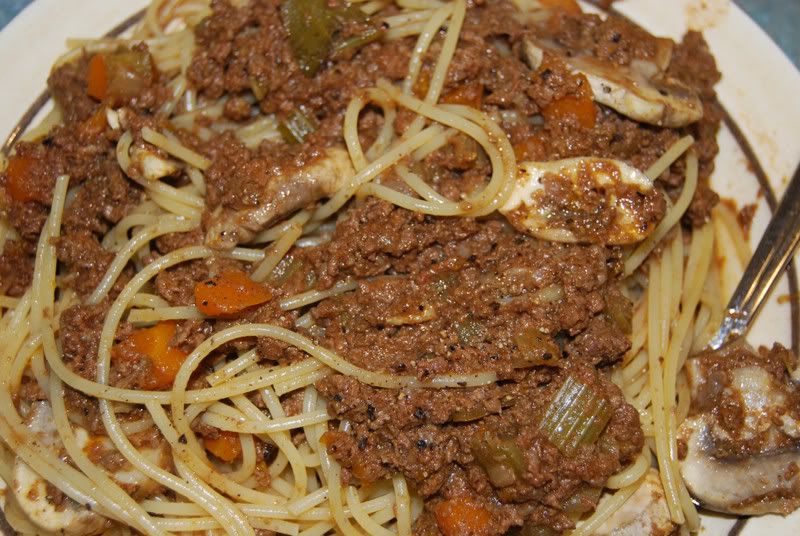
Ingredients:
600 g kangaroo mince
500 mL beef stock
handful of mushrooms of your choosing, sliced
100 g tomato paste
1/3 cup brandy
4 cloves garlic, minced
2 celery sticks, diced
2 chillies, diced
1 carrot, diced
1 large onion, diced
1 1/2 tbs hot curry powder
freshly ground black pepper
sea salt
In a large sauceheat, heat some oil over a low flame. Add the onion, garlic, chillies, celery and carrot. Stir and fry for five minutes, then add a tablespoon of curry powder. Stir and fry for another five minutes, then add the mince. Stir well. Brown the mince over the course of 2-3 minutes, then add the brandy, stirring as you do. Let it reduce, then spoon in the tomato paste. Stir it in, add the stock and cover the pan. Simmer for 1 1/2 hours, stirring occasionally. Remove the lid. Stir in the remaining curry powder. Simmer for a further 25 minutes, then add the mushrooms. Simmer for five more minutes, then cover the pan and take it off the heat. Let it sit this way while you bring some lightly salted water to the boil and cook some spaghetti. Don't cook the spaghetti according to packet instructions--use your senses by tasting the pasta when you think it's about done. It should be soft, but have just a little bite to it. Al dente. Toss the pasta and sauce together.
Too, the addition of curry powder. Adding curry powder to a meaty pasta sauce, for me, is a nostalgic thing. My father used to do with his heavily Australianised 'bolognese' and to this day I can remember the smell of the stuff wafting through the house on the one evening a month or so he'd be in the kitchen.

Ingredients:
600 g kangaroo mince
500 mL beef stock
handful of mushrooms of your choosing, sliced
100 g tomato paste
1/3 cup brandy
4 cloves garlic, minced
2 celery sticks, diced
2 chillies, diced
1 carrot, diced
1 large onion, diced
1 1/2 tbs hot curry powder
freshly ground black pepper
sea salt
In a large sauceheat, heat some oil over a low flame. Add the onion, garlic, chillies, celery and carrot. Stir and fry for five minutes, then add a tablespoon of curry powder. Stir and fry for another five minutes, then add the mince. Stir well. Brown the mince over the course of 2-3 minutes, then add the brandy, stirring as you do. Let it reduce, then spoon in the tomato paste. Stir it in, add the stock and cover the pan. Simmer for 1 1/2 hours, stirring occasionally. Remove the lid. Stir in the remaining curry powder. Simmer for a further 25 minutes, then add the mushrooms. Simmer for five more minutes, then cover the pan and take it off the heat. Let it sit this way while you bring some lightly salted water to the boil and cook some spaghetti. Don't cook the spaghetti according to packet instructions--use your senses by tasting the pasta when you think it's about done. It should be soft, but have just a little bite to it. Al dente. Toss the pasta and sauce together.
Thursday, January 15, 2009
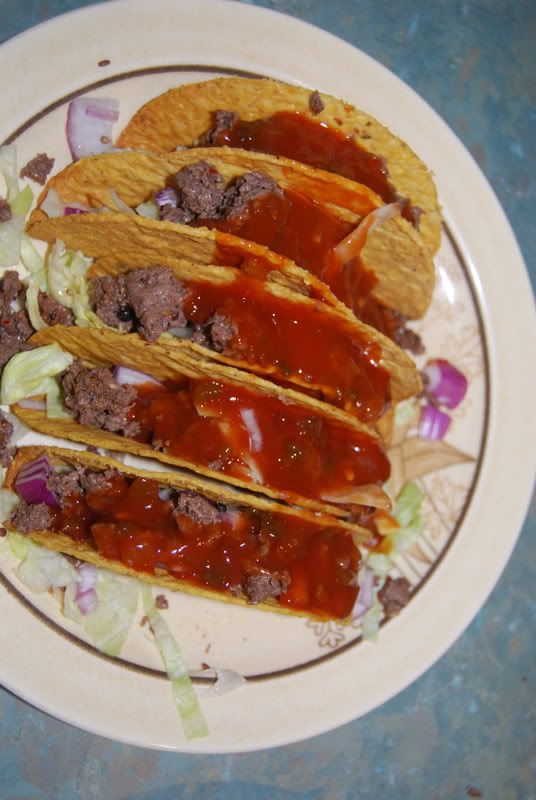
Kangaroo 'gringo' tacos
Let's face it--most tacos you get in the west, they're nothing like the Mexican ones. For starters, Mexican tacos don't use minced beef or cheese or lettuce--the primary ingredients of the tacos we're familiar with. I'm going to upload an authentic recipe next week, but tonight's effort will be my own bastardised tacos. Instead of using the usual beef, though, I'm using kangaroo. The strong flavour of kangaroo makes for an interesting change. Too, you'll find they're much better than the usual 'gringo' tacos.
Kangaroo mince can be had cheaply at most supermarkets in Australia. It's very low in fat--'98% fat free', proclaims the packaging--and, yeah, it's delicious. I've said this before, I think, but many people falsely believe kangaroo is tough and dry. It shouldn't be. With the mince, the trick is to marinate it and then cook it low and slow.
Too, the seasoning mix I use. The quantities of spices I give will make for some leftover. Save it and use it for something else within the next few days.
Ingredients:
400 g kangaroo mince
10 hard taco shells
2 limes, juiced
2 cloves garlic, minced
1 jar taco sauce or tomato salsa
1/2 red onion, diced
1/3 iceberg lettuce, shredded
2 tbs whole allspice berries
1 tbs whole coriander seeds
1 tbs whole cumin seeds
1 tbs whole white peppercorns
1 tsp coarse chilli powder
1 tsp sea salt
1 tsp sweet paprika
oil
sliced fresh chilli, to garnish
Put the allspice, coriander, cumin and peppercorns in a small, non-stick frypan. Roast over a gentle heat, shaking the pan occasionally to move the spices around. You'll know they're finished roasting when they smell spectacular. Roasting spices isn't an exact science. Use your senses. Tip the spices into a mortar and grind with the chilli powder, sea salt and sweet paprika until you have a fine powder.
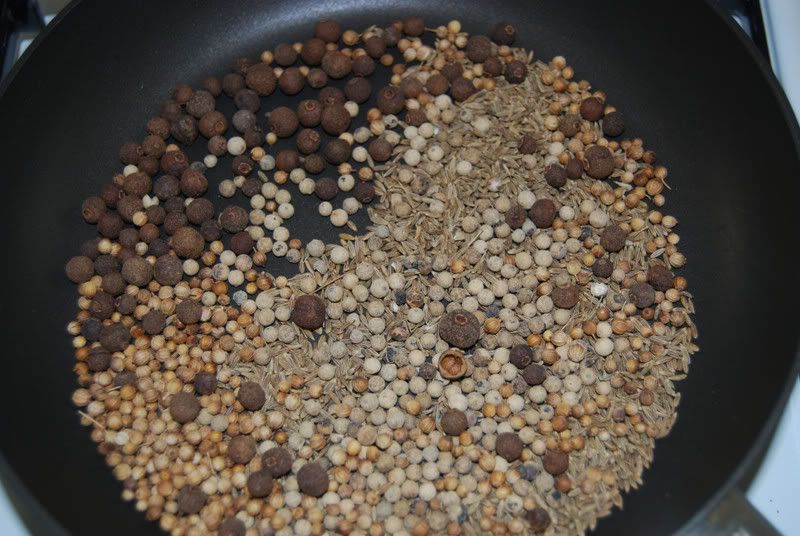
Add 3 tbs of the spice mix and the lime juice to the kangaroo mince in a bowl. Combine thoroughly with your hands. Cover the bowl with cling film and refrigerate for a hour or two.
Heat some oil in a large fry pan over a medium-low flame. Add the garlic and fry until it starts to soften, then add the seasoned mince. Stir and fry until cooked through.
Meanwhile, heat the taco shells in the oven according to the instructions on the packaging.
Don't overstuff the tacos. Add a little lettuce and onion, then add a bit of mince. Spoon taco sauce over the meat. Add chilli slices if using.
Kangaroo mince can be had cheaply at most supermarkets in Australia. It's very low in fat--'98% fat free', proclaims the packaging--and, yeah, it's delicious. I've said this before, I think, but many people falsely believe kangaroo is tough and dry. It shouldn't be. With the mince, the trick is to marinate it and then cook it low and slow.
Too, the seasoning mix I use. The quantities of spices I give will make for some leftover. Save it and use it for something else within the next few days.
Ingredients:
400 g kangaroo mince
10 hard taco shells
2 limes, juiced
2 cloves garlic, minced
1 jar taco sauce or tomato salsa
1/2 red onion, diced
1/3 iceberg lettuce, shredded
2 tbs whole allspice berries
1 tbs whole coriander seeds
1 tbs whole cumin seeds
1 tbs whole white peppercorns
1 tsp coarse chilli powder
1 tsp sea salt
1 tsp sweet paprika
oil
sliced fresh chilli, to garnish
Put the allspice, coriander, cumin and peppercorns in a small, non-stick frypan. Roast over a gentle heat, shaking the pan occasionally to move the spices around. You'll know they're finished roasting when they smell spectacular. Roasting spices isn't an exact science. Use your senses. Tip the spices into a mortar and grind with the chilli powder, sea salt and sweet paprika until you have a fine powder.

Add 3 tbs of the spice mix and the lime juice to the kangaroo mince in a bowl. Combine thoroughly with your hands. Cover the bowl with cling film and refrigerate for a hour or two.
Heat some oil in a large fry pan over a medium-low flame. Add the garlic and fry until it starts to soften, then add the seasoned mince. Stir and fry until cooked through.
Meanwhile, heat the taco shells in the oven according to the instructions on the packaging.
Don't overstuff the tacos. Add a little lettuce and onion, then add a bit of mince. Spoon taco sauce over the meat. Add chilli slices if using.

Wednesday, January 14, 2009
Bolognese sauce
For most Australians, Bolognese sauce contains a single meat product--beef mince. True Bolognese sauce, though, contains at least two. The recipe below was inspired by a recipe I dug up that purported to be as authentic as they come. It contained beef mince, pork mince, sausage, panchetta and ham. Curiously, it didn't have any basil or garlic--ingredients many of us consider very Italian. It was interesting to see how different this recipe was from what I'd grown up with. My dad--not an Italian--regularly made Bolognese with spaghetti. Indeed, it was the only thing he knew how to cook. It was different, even, from some of the more 'modern' versions I've seen whipped up by Maggie Beer and Jamie Oliver. It was interesting, to be sure, but I couldn't help but feel that some of those 'modern' touches were needed. So, off the top of my head, I can tell you that the idea of including a diced chilli comes from Mr. Oliver. I saw him do it and thought, yeah, it needed to be done. The chicken livers came from Maggie Beer. She reckons they add a lot to the flavour and aroma of the sauce and she's right. The veal and beef combo? Well, I'll claim that as my own. Having veal in addition to beef, instead of just beef, adds to the complexity of the flavour of the sauce. Feel free to substitute the 200 g of veal with a further 200 g of beef, though. As for the garlic, well, to me, as a non-Italian, as someone who's grown up on Australianised Bolognese, excluding garlic of all things seems sinful. And the basil? Same thing, really.
The quantities below make for a lot of sauce. Don't worry, this stuff keeps well in the fridge (2-3 days) and freezer (2 months) Indeed, it's even better on the second day.
Ingredients:
250 g pork mince
200 g beef mince
200 g veal mince (substitute with more beef mince if you must)
200 g chicken livers
200 g tomato paste
100 g panchetta, diced
50 g ham, diced
2 cups (500 mL) beef stock
3/4 cup (185 mL) red wine
4 cloves of garlic, diced
3 dried bay leaves, crumbled
2 sticks of celery, diced
1 carrot, diced
1 chilli, diced (seeds removed)
1 Italian pork sausage, roughly chopped
1 onion, diced
handful of fresh basil leaves, roughly chopped
a touch of freshly grated nutmeg
a grind of black pepper
sea salt
In a saucepan, fry the panchetta until crispy. Remove from pan and set aside.
Fry the chicken livers until they've got a bit of colour--perhaps 30 seconds--and then set them aside to cool. When they're cool, roughly chop them.
Give the saucepan a clean, if need be, and then fry the carrot, celery, chilli, garlic and onion until they begin to soften. At this point, add the sausage and mince. Fry until mince has a bit of colour. Return the liver and panchetta to the saucepan.
Add the wine. Stir. Add the tomato paste. Fry for a further 4 minutes, then add the beef stock, along with a little nutmeg, the basil leaves and the bay leaves. When sauce starts to bubble, reduce heat and cover. Simmer for a hour, removing the lid occasionally to stir. When the hour is up, remove the lid. Simmer, stirring occasionally, for a further 30 minutes. Then add the ham. Simmer for 30 more minutes then allow to cool.
If you're planning on making spaghetti Bolognese, heat some of the sauce over a low flame in a saucepan while cooking some spaghetti. The general rule is 80-100 g of pasta per person. Dress with a few basil leaves and a splash of extra virgin olive oil.
The quantities below make for a lot of sauce. Don't worry, this stuff keeps well in the fridge (2-3 days) and freezer (2 months) Indeed, it's even better on the second day.
Ingredients:
250 g pork mince
200 g beef mince
200 g veal mince (substitute with more beef mince if you must)
200 g chicken livers
200 g tomato paste
100 g panchetta, diced
50 g ham, diced
2 cups (500 mL) beef stock
3/4 cup (185 mL) red wine
4 cloves of garlic, diced
3 dried bay leaves, crumbled
2 sticks of celery, diced
1 carrot, diced
1 chilli, diced (seeds removed)
1 Italian pork sausage, roughly chopped
1 onion, diced
handful of fresh basil leaves, roughly chopped
a touch of freshly grated nutmeg
a grind of black pepper
sea salt
In a saucepan, fry the panchetta until crispy. Remove from pan and set aside.
Fry the chicken livers until they've got a bit of colour--perhaps 30 seconds--and then set them aside to cool. When they're cool, roughly chop them.
Give the saucepan a clean, if need be, and then fry the carrot, celery, chilli, garlic and onion until they begin to soften. At this point, add the sausage and mince. Fry until mince has a bit of colour. Return the liver and panchetta to the saucepan.
Add the wine. Stir. Add the tomato paste. Fry for a further 4 minutes, then add the beef stock, along with a little nutmeg, the basil leaves and the bay leaves. When sauce starts to bubble, reduce heat and cover. Simmer for a hour, removing the lid occasionally to stir. When the hour is up, remove the lid. Simmer, stirring occasionally, for a further 30 minutes. Then add the ham. Simmer for 30 more minutes then allow to cool.
If you're planning on making spaghetti Bolognese, heat some of the sauce over a low flame in a saucepan while cooking some spaghetti. The general rule is 80-100 g of pasta per person. Dress with a few basil leaves and a splash of extra virgin olive oil.
Tuesday, January 13, 2009
Buffalo meatballs with a mustard and pepper coating
Ingredients:
500 g buffalo sausages
1/4 cup flour
1 tbs mustard seeds, crushed
1 tsp powdered mustard
1 tsp freshly ground black pepper
1/2 tsp tumeric (optional--I use it purely for the colour)
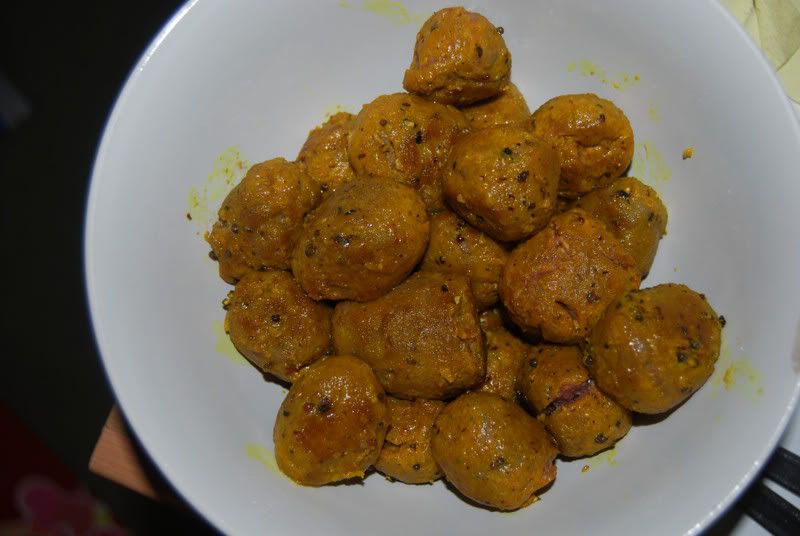
Combine everything but the sausages in a cup or other small vessel. Set aside.
Slit the sausage casings open with a paring knife. Extract the filling. Pull pieces of the filling off and roll into meatballs. Place in a bowl, add the seasoned flour and cover the bowl well with cling film. Shake until meatballs are evenly coated. Fry over a gentle heat until cooked though.
500 g buffalo sausages
1/4 cup flour
1 tbs mustard seeds, crushed
1 tsp powdered mustard
1 tsp freshly ground black pepper
1/2 tsp tumeric (optional--I use it purely for the colour)

Combine everything but the sausages in a cup or other small vessel. Set aside.
Slit the sausage casings open with a paring knife. Extract the filling. Pull pieces of the filling off and roll into meatballs. Place in a bowl, add the seasoned flour and cover the bowl well with cling film. Shake until meatballs are evenly coated. Fry over a gentle heat until cooked though.
Monday, January 12, 2009
Beef and pork burger
Combining beef and pork mince in the one burger is a very good idea. For starters, it's a flavoursome combination. And too, the pork mince is or at least should be fatty. Fattier than the beef mince. That fat, that glorious fat, will keep the patties moist as you cook them.
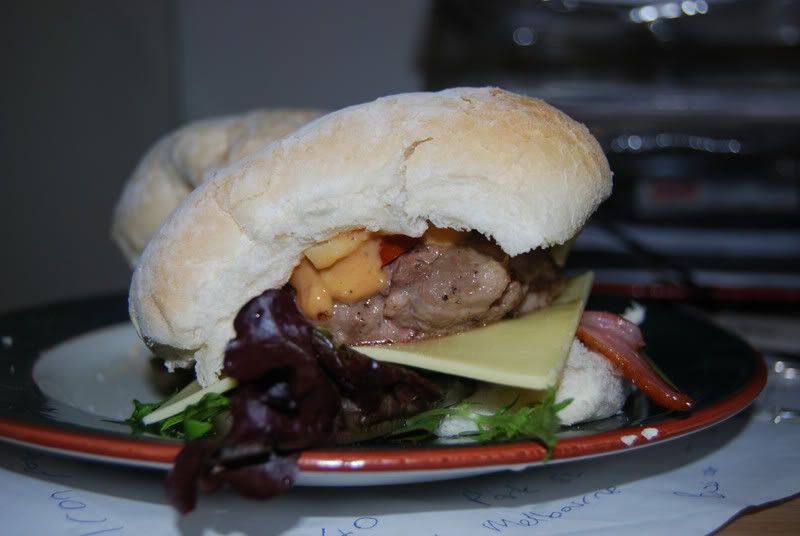
Ingredients:
200 g beef mince
200 g pork mince
4 slices Swiss cheese
4 small slices of rindless bacon
4 good quality rolls, opened
2 cloves garlic, finely minced
1 tomato, sliced and seasoned with sea salt and freshly ground black pepper
1/2 red onion, finely diced
handful mixed lettuce leaves
1 tbs Dijon mustard
1 tbs tomato ketchup
freshly ground black pepper, to taste
sea salt, to taste
Tabasco sauce, to taste
olive oil
The day before, combine the beef mince, pork mince and minced garlic. Add freshly ground black pepper, sea salt and Tabasco sauce to taste. Form seasoned mince into four patties and place on a plate. Use your thumb to make an indentation in the top of each patty. Cover with cling film and refrigerate overnight.
Make the sauce by combining the Dijon mustard, tomato ketchup and onion. Season to taste with sea salt and freshly ground black pepper.
Season the tomato slices with a little sea salt and freshly ground black pepper.
Fry the patties over a medium-low flame. When liquid starts to pool on top, flip them carefully. The secret to keeping patties in one piece isn't to add saw dust (i.e. supermarket-bought bread crumbs) or egg. It's thus--don't add that'll reduce their structural integrity (i.e. onion), refrigerate for a few hours or overnight once formed and cook slowly.
Meanwhile, lightly toast the burger buns under the broiler. When buns are toasted, increase the temperature of the broiler and add the slices of bacon. Drizzle a little olive on them and broil until crispy.
Place the lettuce on the lower bun, then add, in the following order, the bacon, the cheese, the beef and pork patty, the tomato and a spoonful of sauce.

Ingredients:
200 g beef mince
200 g pork mince
4 slices Swiss cheese
4 small slices of rindless bacon
4 good quality rolls, opened
2 cloves garlic, finely minced
1 tomato, sliced and seasoned with sea salt and freshly ground black pepper
1/2 red onion, finely diced
handful mixed lettuce leaves
1 tbs Dijon mustard
1 tbs tomato ketchup
freshly ground black pepper, to taste
sea salt, to taste
Tabasco sauce, to taste
olive oil
The day before, combine the beef mince, pork mince and minced garlic. Add freshly ground black pepper, sea salt and Tabasco sauce to taste. Form seasoned mince into four patties and place on a plate. Use your thumb to make an indentation in the top of each patty. Cover with cling film and refrigerate overnight.
Make the sauce by combining the Dijon mustard, tomato ketchup and onion. Season to taste with sea salt and freshly ground black pepper.
Season the tomato slices with a little sea salt and freshly ground black pepper.
Fry the patties over a medium-low flame. When liquid starts to pool on top, flip them carefully. The secret to keeping patties in one piece isn't to add saw dust (i.e. supermarket-bought bread crumbs) or egg. It's thus--don't add that'll reduce their structural integrity (i.e. onion), refrigerate for a few hours or overnight once formed and cook slowly.
Meanwhile, lightly toast the burger buns under the broiler. When buns are toasted, increase the temperature of the broiler and add the slices of bacon. Drizzle a little olive on them and broil until crispy.
Place the lettuce on the lower bun, then add, in the following order, the bacon, the cheese, the beef and pork patty, the tomato and a spoonful of sauce.
Subscribe to:
Posts (Atom)

 Posts
Posts

