I picked up a tray of diced veal the other day on special. A couple days from the best before, see. I was originally intending on a curry, but today I realised I couldn't be bothered. Something I didn't need to simmer for a hour or so would be better.
Ingredients:
300 g diced veal
4 tortillas or large chapattis, warmed
2 tomatoes, diced, seasoned with sea salt and freshly ground black pepper
2 cloves garlic, sliced
1 large onion, sliced
1 lump ginger, diced
1 tsp coriander seeds, ground
1 tsp chilli powder
1 tsp turmeric powder
1 tsp sweet paprika
1/2 tsp cumin seeds, ground
4 cloves, ground
freshly ground black pepper
peanut oil
yoghurt, to serve
A few hours before cooking, put the veal, all the ground spices and some freshly ground black pepper in a zip lock bag. Shake to cover the meat evenly and then refrigerate.
Heat oil in a fry pan over a medium low flame. Fry the onion, garlic and ginger until they begin to soften. Add the tomato. Stir and fry until tomato has softened. Add the seasoned veal. Stir and fry until veal is cooked medium rare. Spoon into tortillas. Add a couple of spoonfuls of yoghurt.
Showing posts with label curry. Show all posts
Showing posts with label curry. Show all posts
Tuesday, February 3, 2009

Monday, February 2, 2009
Hot goat curry
Ingredients:
400 g boneless goat meat, diced
4 garlic cloves, sliced
1 onion, sliced
1 piece ginger, sliced
1 tomato, diced
1 bunch coriander
1 tbs black pepper, ground
1 tbs chilli powder
1 tbs coriander seeds, ground
1 tsp turmeric powder
6 cardamom pods, ground
6 cloves, ground
1 star anise, ground
30 mL apple cider vinegar
ghee or oil
hot chilli sauce, to taste
Heat ghee or oil in a small saucepan. Fry onion, garlic and ginger until soft. Add ground spices. Fry for a couple of minutes. Add tomato and about a tablespoon's worth of chopped coriander stems. Fry for five minutes and then add the goat meat. Brown on all sides, then add the apple cider vinegar. Cook for a minute then add 400 mL water. Season with salt and chilli sauce. Simmer for one hour--cover the pan for the first 45 minutes, then remove the lid for the final 15 minutes of cooking. Add coriander leaves for the final 10 minutes.
400 g boneless goat meat, diced
4 garlic cloves, sliced
1 onion, sliced
1 piece ginger, sliced
1 tomato, diced
1 bunch coriander
1 tbs black pepper, ground
1 tbs chilli powder
1 tbs coriander seeds, ground
1 tsp turmeric powder
6 cardamom pods, ground
6 cloves, ground
1 star anise, ground
30 mL apple cider vinegar
ghee or oil
hot chilli sauce, to taste
Heat ghee or oil in a small saucepan. Fry onion, garlic and ginger until soft. Add ground spices. Fry for a couple of minutes. Add tomato and about a tablespoon's worth of chopped coriander stems. Fry for five minutes and then add the goat meat. Brown on all sides, then add the apple cider vinegar. Cook for a minute then add 400 mL water. Season with salt and chilli sauce. Simmer for one hour--cover the pan for the first 45 minutes, then remove the lid for the final 15 minutes of cooking. Add coriander leaves for the final 10 minutes.
Friday, January 23, 2009
Doro wot
Doro wot is an Ethiopian dish. The name translates to 'chicken stew', but rest assured this is quite different to the stews you're used of. With its thick, heavily-spiced gravy, doro wot has earned its place in the curries category of this blog, even though it's technically not a curry.
Ingredients:
2 chicken marylands (legs), skinned and cut into a few pieces, seasoned with salt
400 mL chicken stock, plus extra to liquify berbere paste
140 g tomato paste
4 cloves of garlic, peeled
2 shallots, cut into chunks
1 onion, finely sliced
1 small piece of ginger, peeled
1 tbs berbere spice mix
sea salt
ghee or oil
steamed rice, to serve
Blitz the berbere spice mix in a food processor with the shallots, garlic and ginger. Add a little chicken stock so a thick paste forms.
Fry the onion in a large saucepan over a low flame. Don't use any oil or ghee. Keep stirring to prevent sticking and/or burning. After five minutes, you can add the ghee. Too, add the berbere paste. Stir and stir and stir. Fry for five minutes more, then add the tomato paste. Stir and stir and stir again. After five minutes, add the stock. Let the gravy cook for a couple of minutes and then add the chicken pieces. Cover and cook for one hour, stirring occasionally. Serve with steamed rice.
Ingredients:
2 chicken marylands (legs), skinned and cut into a few pieces, seasoned with salt
400 mL chicken stock, plus extra to liquify berbere paste
140 g tomato paste
4 cloves of garlic, peeled
2 shallots, cut into chunks
1 onion, finely sliced
1 small piece of ginger, peeled
1 tbs berbere spice mix
sea salt
ghee or oil
steamed rice, to serve
Blitz the berbere spice mix in a food processor with the shallots, garlic and ginger. Add a little chicken stock so a thick paste forms.
Fry the onion in a large saucepan over a low flame. Don't use any oil or ghee. Keep stirring to prevent sticking and/or burning. After five minutes, you can add the ghee. Too, add the berbere paste. Stir and stir and stir. Fry for five minutes more, then add the tomato paste. Stir and stir and stir again. After five minutes, add the stock. Let the gravy cook for a couple of minutes and then add the chicken pieces. Cover and cook for one hour, stirring occasionally. Serve with steamed rice.
Thursday, January 22, 2009
Ghee and oil
With some curries, I'll call for ghee. Ghee is clarified butter and is used in South Asian and Middle Eastern cooking in place or alongside oil. The Ethiopians make two similar products--a spiced clarified butter known as nitter kebbeh and a vegetarian product with an Amharic name that translates to 'vegetable ghee'. This 'vegetable ghee' is spiced like nitter kebbeh, but is healthier than any ghee made from butter (at least according to the packaging and the woman who runs the Ethiopian grocer I go to). Any ghee--be it Indian or Ethiopian--will suffice for curry-making. You can buy South Asian ghee in South Asian grocers and many supermarkets. You can use oil instead of ghee.
Meat and curries
In westernised Thai curries, you'll often see breast and thigh meat used. Or fillet steak. And that's lovely. These curries require thin slices of tender cuts as they cook in a short time. For other curries, though, forget these premium cuts. Go for the cheap, flavoursome cuts like lamb shanks, goat shoulder, chicken marylands (the legs) and chuck steak. These cuts are tough, yes. They are unsuitable for pan-frying, yes. You may be reluctant to use them because a voice in your head is insisting that no, Chris is wrong, the Indians are wrong, the Nepalese are wrong, the South Africans are wrong, that you should use breast instead. Using fillet steak in a beef curry is a waste of money. Meat curries typically take a while to cook. Those cheap and tough cuts of meat tenderise when simmering in a gravy over the course of a hour or two. Too, these bony cuts are gelatinous. As they cook, they thicken the gravy. I know that bony pieces of meat are hard to eat with a fork, so try eating your curry the proper way--with Indian breads. Many cultures worldwide, including the Indians, believe that food eaten with the hands tastes better. I'm not sure about that, but I do know it's much easier to manage to a goat curry if you get your hands in there. The rule of cooking on the bone also applies to seafood. Crabs and lobsters should be cooked in the shell or, if a recipe instructs you to remove the meat from the shell (and it probably shouldn't), you should still throw the shell into the gravy after giving it a quick rinse. Yeah, just like you're making a seafood stock. It'll add a lot of flavour to the gravy.
Finally, marinades. I said you should use tougher cuts of meat. If you want to tenderise these cuts somewhat before cooking, marinate the meat in something acidic like fresh citrus juice. You can also use grated ginger, as it contains an enzyme that will tenderise meat. Some Indians use the pulp of papaya to achieve similar results. You should only marinate the meat for a few hours. Leave it too long and you'll end up making the outer layer of the piece of meat soggy.
Finally, marinades. I said you should use tougher cuts of meat. If you want to tenderise these cuts somewhat before cooking, marinate the meat in something acidic like fresh citrus juice. You can also use grated ginger, as it contains an enzyme that will tenderise meat. Some Indians use the pulp of papaya to achieve similar results. You should only marinate the meat for a few hours. Leave it too long and you'll end up making the outer layer of the piece of meat soggy.
Spices
Curries might have a primary ingredient of meat, seafood, lentils, vegetables or even fruit, but surely what defines this style of cooking in the eyes of many is the combination of spices.
For those just getting into curry-making, know that you're going to have to buy many spices. Of course, you should only buy spices as you encounter recipes that ask for those specific spices. Buy small packets until you know what spices you like and what spices you most frequently use. For instance, I go through large amounts of both coriander seeds and cumin seeds. It makes sense for me to buy large bags of them. Conversely, I rarely use nigella, so I only have a small packet sitting in the cupboard. Large packets are cheaper, yes, but spices don't have an unlimited shelf life. They lose flavour and pungency over time. It's no good saving a few cents on a bag of spice if, by the time you get around to finishing it, it has long since lost its potency.
I buy most of my spices at an Indian grocer. What I can't get there I'll get at either an oriental grocer, a Middle Eastern grocer or an Ethiopian grocer. The latter I've only had to use for some really obscure spices. I don't call for these in my recipes, though, so don't worry too much if you don't have the faintest idea where the nearest Ethiopian grocer is. Incidentally, if you live in Melbourne, you can find a number of Ethiopian grocers in Footscray. An increasing number of Ethiopian and Sudanese grocers are opening in the south eastern suburbs, too. But I digress. I've found Indian grocers to have the best place to shop. Their prices are usually reasonable and their turnover is high. Classy food stores like The Essential Ingredient and Simon Johnson also stock a good range of spices, although expect to may significantly more than you would at the local South Asian place.
Always buy your spices whole. Chilli powder is okay, but about everything else--from pepper to cardamom to cumin--should be bought whole. Sure, with pre-ground spices you save a little bit of time, but the flavour and aroma is inferior. Too, whole spices have a longer shelf life. They're also easier to identify by sight. This is especially relevant in my pantry where a good half of my spice collection is unlabelled.
To maximise the flavour and aroma of spices, you should roast them before grinding them. To do this, heat a small, non-stick fry pan over a low flame. Don't use any oil or ghee. Add the whole spices. Stir with a wooden spoon to prevent them from burning. You'll know the spices are roasted when a strong and pleasant aroma fills your kitchen. Working with spices is all about using your senses.
Many recipes that use curry powder--not a spice in itself, but a blend of spices--often call for you to roast curry powder. If they don't ask you to do it, do it anyway. If the recipe calls for you to fry up some onions, add the curry powder just as the onions begin to soften and roast for a few minutes before adding the next ingredient. If you're supposed to add the curry powder to a liquid, you can roast it on its own in a small fry pan.
To grind spices, use either a mortar and pestle or an electric spice grinder. I use the former. If a recipe calls for you to grind fresh garlic, ginger or chillies, add a little coarse sea salt to the mortar (the bowl). The salt acts as an abrasive, making your job significantly easier. Too, if a recipe calls for many spices to blended together, grind them all in one go. They'll combine as you grind.
When using a mortar and pestle, there's absolutely no need to be forceful. With a granite mortar and pestle like the one I use, the pestle is quite heavy. If you're too forceful, light, round spices such as peppercorns and coriander seeds are liable to bounce out of the mortar and make a mess.
Get to know the properties of the spices in your collection. Try and reach a point where you can recognise them by sight and smell and taste. A good reference book is Ian Hemphill's Spice Notes and Recipes--it's very extensive, although I have a few spices that aren't mentioned in it. Some curry books feature decent appendices on spices. But book or no book, you should learn the properties of spices for yourself. Some spices have a strong flavour or aroma and could, if used carelessly, overpower everything else in your dish. Others you can be more generous with. Understand that not all spices are hot. Some are used to add colour to a dish. Some are sweet. Some are sour. In Indian cuisine, different curries employ different combinations of spices. Some curries are hot. Some curries are sour.
Remember that dried spices often taste different to the fresh ingredients from which they are derived. Dried chilli has a different flavour to fresh chilli. Dried garlic tastes different to fresh garlic. Dried ginger is quite distinct from fresh ginger. If you substitute the fresh for the dry or the other way round, expect a different end result.
How you store your spices is very important. Mistreat your spices and they will lose pungency and flavour. Keep them somewhere cool, dry and dark. Store them in jars or tins or thick zip-lock bags. Some South Asian grocers already sell them in the latter.
For those just getting into curry-making, know that you're going to have to buy many spices. Of course, you should only buy spices as you encounter recipes that ask for those specific spices. Buy small packets until you know what spices you like and what spices you most frequently use. For instance, I go through large amounts of both coriander seeds and cumin seeds. It makes sense for me to buy large bags of them. Conversely, I rarely use nigella, so I only have a small packet sitting in the cupboard. Large packets are cheaper, yes, but spices don't have an unlimited shelf life. They lose flavour and pungency over time. It's no good saving a few cents on a bag of spice if, by the time you get around to finishing it, it has long since lost its potency.
I buy most of my spices at an Indian grocer. What I can't get there I'll get at either an oriental grocer, a Middle Eastern grocer or an Ethiopian grocer. The latter I've only had to use for some really obscure spices. I don't call for these in my recipes, though, so don't worry too much if you don't have the faintest idea where the nearest Ethiopian grocer is. Incidentally, if you live in Melbourne, you can find a number of Ethiopian grocers in Footscray. An increasing number of Ethiopian and Sudanese grocers are opening in the south eastern suburbs, too. But I digress. I've found Indian grocers to have the best place to shop. Their prices are usually reasonable and their turnover is high. Classy food stores like The Essential Ingredient and Simon Johnson also stock a good range of spices, although expect to may significantly more than you would at the local South Asian place.
Always buy your spices whole. Chilli powder is okay, but about everything else--from pepper to cardamom to cumin--should be bought whole. Sure, with pre-ground spices you save a little bit of time, but the flavour and aroma is inferior. Too, whole spices have a longer shelf life. They're also easier to identify by sight. This is especially relevant in my pantry where a good half of my spice collection is unlabelled.
To maximise the flavour and aroma of spices, you should roast them before grinding them. To do this, heat a small, non-stick fry pan over a low flame. Don't use any oil or ghee. Add the whole spices. Stir with a wooden spoon to prevent them from burning. You'll know the spices are roasted when a strong and pleasant aroma fills your kitchen. Working with spices is all about using your senses.
Many recipes that use curry powder--not a spice in itself, but a blend of spices--often call for you to roast curry powder. If they don't ask you to do it, do it anyway. If the recipe calls for you to fry up some onions, add the curry powder just as the onions begin to soften and roast for a few minutes before adding the next ingredient. If you're supposed to add the curry powder to a liquid, you can roast it on its own in a small fry pan.
To grind spices, use either a mortar and pestle or an electric spice grinder. I use the former. If a recipe calls for you to grind fresh garlic, ginger or chillies, add a little coarse sea salt to the mortar (the bowl). The salt acts as an abrasive, making your job significantly easier. Too, if a recipe calls for many spices to blended together, grind them all in one go. They'll combine as you grind.
When using a mortar and pestle, there's absolutely no need to be forceful. With a granite mortar and pestle like the one I use, the pestle is quite heavy. If you're too forceful, light, round spices such as peppercorns and coriander seeds are liable to bounce out of the mortar and make a mess.
Get to know the properties of the spices in your collection. Try and reach a point where you can recognise them by sight and smell and taste. A good reference book is Ian Hemphill's Spice Notes and Recipes--it's very extensive, although I have a few spices that aren't mentioned in it. Some curry books feature decent appendices on spices. But book or no book, you should learn the properties of spices for yourself. Some spices have a strong flavour or aroma and could, if used carelessly, overpower everything else in your dish. Others you can be more generous with. Understand that not all spices are hot. Some are used to add colour to a dish. Some are sweet. Some are sour. In Indian cuisine, different curries employ different combinations of spices. Some curries are hot. Some curries are sour.
Remember that dried spices often taste different to the fresh ingredients from which they are derived. Dried chilli has a different flavour to fresh chilli. Dried garlic tastes different to fresh garlic. Dried ginger is quite distinct from fresh ginger. If you substitute the fresh for the dry or the other way round, expect a different end result.
How you store your spices is very important. Mistreat your spices and they will lose pungency and flavour. Keep them somewhere cool, dry and dark. Store them in jars or tins or thick zip-lock bags. Some South Asian grocers already sell them in the latter.
Wednesday, January 21, 2009
Chicken and cashew nut curry
This is a relatively mild curry that includes, yes, chicken and cashew nuts. Buy the freshest cashew nuts you can. I'm lucky enough to have a grocer near my house that sells a wide range nuts, dried beans and dried fruits at a reasonable price. His produce is always very fresh due to a high turnover. Only buy nuts from retailers that have a high turnover. The nuts sold in supermarkets are often of questionable freshness.
Too, a word on ghee. You can buy ghee in Indian grocers and some supermarkets. What I use technically isn't ghee--it's a vegetarian product from Ethiopia that's far healthier. Ethiopian 'ghee', whether it's the vegetarian stuff I have or nitter kebbeh (made in the same way as Indian ghee), contains spices so as it melts it emits the most wonderful aroma and imparts flavour into the onions, garlic and ginger. Apologies for your not being able to tell you what this stuff is called. The writing on the packaging is entirely in Amharic.
Ingredients:
2 chicken marylands (legs), separated into thighs and drumsticks, skin removed
400 mL coconut cream
100 g unsalted cashew nuts
10 curry leaves
10 dried Kashmiri chillies
6 cardamom pods, ground
6 cloves garlic, minced
4 cloves, ground
1 onion, diced
1 tomato, diced
a piece of ginger, diced
a piece of a cinnamon quill, ground
2 tbs hot curry powder
1 tbs ghee (substitute the Ethiopian stuff I use or regular oil)
1/4 tsp tandoori colouring
freshly ground black pepper
sea salt
steamed rice, to serve
Season the chicken pieces with sea salt and freshly ground black pepper.
Melt some ghee in a large saucepan. Fry the onion, garlic, ginger and dried chillies over a low heat for five minutes. Add the curry powder, cinnamon, cloves and cardamom. Stir and fry for five minutes. Add a little more ghee if it looks like it's going to dry out. Add the tomato. Fry for another five minutes and add the chicken. Stir so the chicken is well covered by the spiced tomato and onion. Fry for a further five minutes. Add coconut cream and tandoori colouring. Cover pan and simmer for 45 minutes, stirring occasionally. Remove the lid and simmer for five minutes before adding the curry leaves. Simmer for ten more minutes and serve.
Too, a word on ghee. You can buy ghee in Indian grocers and some supermarkets. What I use technically isn't ghee--it's a vegetarian product from Ethiopia that's far healthier. Ethiopian 'ghee', whether it's the vegetarian stuff I have or nitter kebbeh (made in the same way as Indian ghee), contains spices so as it melts it emits the most wonderful aroma and imparts flavour into the onions, garlic and ginger. Apologies for your not being able to tell you what this stuff is called. The writing on the packaging is entirely in Amharic.
Ingredients:
2 chicken marylands (legs), separated into thighs and drumsticks, skin removed
400 mL coconut cream
100 g unsalted cashew nuts
10 curry leaves
10 dried Kashmiri chillies
6 cardamom pods, ground
6 cloves garlic, minced
4 cloves, ground
1 onion, diced
1 tomato, diced
a piece of ginger, diced
a piece of a cinnamon quill, ground
2 tbs hot curry powder
1 tbs ghee (substitute the Ethiopian stuff I use or regular oil)
1/4 tsp tandoori colouring
freshly ground black pepper
sea salt
steamed rice, to serve
Season the chicken pieces with sea salt and freshly ground black pepper.
Melt some ghee in a large saucepan. Fry the onion, garlic, ginger and dried chillies over a low heat for five minutes. Add the curry powder, cinnamon, cloves and cardamom. Stir and fry for five minutes. Add a little more ghee if it looks like it's going to dry out. Add the tomato. Fry for another five minutes and add the chicken. Stir so the chicken is well covered by the spiced tomato and onion. Fry for a further five minutes. Add coconut cream and tandoori colouring. Cover pan and simmer for 45 minutes, stirring occasionally. Remove the lid and simmer for five minutes before adding the curry leaves. Simmer for ten more minutes and serve.
Tuesday, January 20, 2009
Chicken vindaloo
Real vindaloo is traditionally made with pork or duck. I've previously provided a recipe that uses pork's wild cousin. It was significantly milder than this one is, so you can use the spices from that recipe in this recipe if you're not too keen on feeling the heat. And yes, you can substitute the chicken for duck.
Ingredients:
2 chicken marylands (legs), split into thighs and drumsticks, skinned
10 dried Kashmiri chillies
10 curry leaves
4 cloves of garlic, peeled
3 cloves
1 onion, sliced
1 small lump of ginger, peeled
1 small shard snapped from a cinnamon quill
1 star anise pod
1 tomato, diced
1 tsp brown sugar
1 tsp cumin
1 tsp poppy seeds
1 tsp sweet paprika
1/2 tsp mustard seeds
apple cider vinegar, as necessary
freshly ground black pepper
sea salt
oil
steamed rice, to serve
Soak the dried chillies in water to soften them. Season the chicken pieces with freshly ground black pepper and sea salt and set aside until needed.
Heat a generous splash oil in a saucepan. Fry the onion over low heat for ten minutes or until soft. Meanwhile, grind the cumin, star anise, cinnamon, and cloves in a mortar and pestle. Transfer the ground spices to a food processor and blitz along with the garlic, ginger, poppy seeds, paprika, mustard seeds and softened chillies. Gradually add the the apple cider vinegar, stopping when a thick paste forms.
When the onions are soft, add the tomato and the paste to the saucepan and fry for five minutes, stirring constantly. If the paste seems like it's drying out, add a splash of apple cider vinegar. Add the chicken and cook for five minutes. Add 600 mL water and the brown sugar and cover the saucepan. Simmer for 55 minutes, stirring occasionally. Remove the lid and add the curry leaves. Simmer for a further 5 minutes and serve.
Rice is obviously a nice accompaniment, as are Indian breads and yoghurt.
Ingredients:
2 chicken marylands (legs), split into thighs and drumsticks, skinned
10 dried Kashmiri chillies
10 curry leaves
4 cloves of garlic, peeled
3 cloves
1 onion, sliced
1 small lump of ginger, peeled
1 small shard snapped from a cinnamon quill
1 star anise pod
1 tomato, diced
1 tsp brown sugar
1 tsp cumin
1 tsp poppy seeds
1 tsp sweet paprika
1/2 tsp mustard seeds
apple cider vinegar, as necessary
freshly ground black pepper
sea salt
oil
steamed rice, to serve
Soak the dried chillies in water to soften them. Season the chicken pieces with freshly ground black pepper and sea salt and set aside until needed.
Heat a generous splash oil in a saucepan. Fry the onion over low heat for ten minutes or until soft. Meanwhile, grind the cumin, star anise, cinnamon, and cloves in a mortar and pestle. Transfer the ground spices to a food processor and blitz along with the garlic, ginger, poppy seeds, paprika, mustard seeds and softened chillies. Gradually add the the apple cider vinegar, stopping when a thick paste forms.
When the onions are soft, add the tomato and the paste to the saucepan and fry for five minutes, stirring constantly. If the paste seems like it's drying out, add a splash of apple cider vinegar. Add the chicken and cook for five minutes. Add 600 mL water and the brown sugar and cover the saucepan. Simmer for 55 minutes, stirring occasionally. Remove the lid and add the curry leaves. Simmer for a further 5 minutes and serve.
Rice is obviously a nice accompaniment, as are Indian breads and yoghurt.
Sunday, January 18, 2009
Curry of goat and vegetables
You could, of course, use lamb for this recipe. But so long as you have access to goat--available at any butcher that seriously caters to folks of South Asian, East African or Caribbean descent--you should try it. It's a lovely meat, similar in flavour to lamb. You could use mutton too, I suppose. Whatever you end up using for the meat, buy on-the-bone. Meat-on-the-bone tastes better and is more fun to eat. What's that? It's hard to eat with a fork? Well, curry wasn't meant to be eaten with a fork!
Ingredients:
500 g diced goat, on-the-bone
1/2 cup plain yoghurt
4 cloves garlic, peeled
4 green cardamon pods
2 sticks of celery, roughly chopped
1 aubergine/eggplant, roughly chopped
1 carrot, roughly chopped
1 onion, cut into chunks
1 tbs chilli powder
1 bunch fresh coriander/cilantro
1 tbs coriander seeds
1 tbs cumin seeds
1 tbs fennel seeds
1 tbs nigella/black cumin
1 tbs turmeric powder
1 tsp fenugreek seeds
1 tsp salt
1 tsp sweet paprika
oil
apple cider vinegar, as necessary
steamed rice, to serve
Coarsely the cardamom pods, coriander seeds, cumin seeds, fennel seeds and fenugreek seeds with a mortar and pestle. Pour into the food processor, along with the onion, garlic and a couple of tablespoons worth of coriander stalks (retain the leaves for later). Blitz, gradually adding apple cider vinegar until a paste forms. How much apple cider vinegar you'll need depends on the size of the onion, the size of the garlic, the direction of the wind, the thickness of your nostril hairs, the position of Saturn in relation to the patch of grass your goat last grazed on and various other factors.
Over a low flame, heat a generous splash of oil in a large saucepan. When oil is hot, add the curry paste and fry for 5 minutes or until it noticeably darkens. Add the pieces of goat and stir so they get covered in the paste. Fry for 5 minutes, ensuring that you keep moving everything around. Otherwise you'll end up with burnt curry paste. Add 3 cups of water, cover the saucepan and cook for 1 hour and 30 minutes, stirring occasionally. At this point, add the aubergine/eggplant, carrot and celery and cook for a further 30 minutes. Remove lid, take off heat and slowly stir in the yoghurt. Garnish with the coriander leaves.
Serve with steamed rice.
Ingredients:
500 g diced goat, on-the-bone
1/2 cup plain yoghurt
4 cloves garlic, peeled
4 green cardamon pods
2 sticks of celery, roughly chopped
1 aubergine/eggplant, roughly chopped
1 carrot, roughly chopped
1 onion, cut into chunks
1 tbs chilli powder
1 bunch fresh coriander/cilantro
1 tbs coriander seeds
1 tbs cumin seeds
1 tbs fennel seeds
1 tbs nigella/black cumin
1 tbs turmeric powder
1 tsp fenugreek seeds
1 tsp salt
1 tsp sweet paprika
oil
apple cider vinegar, as necessary
steamed rice, to serve
Coarsely the cardamom pods, coriander seeds, cumin seeds, fennel seeds and fenugreek seeds with a mortar and pestle. Pour into the food processor, along with the onion, garlic and a couple of tablespoons worth of coriander stalks (retain the leaves for later). Blitz, gradually adding apple cider vinegar until a paste forms. How much apple cider vinegar you'll need depends on the size of the onion, the size of the garlic, the direction of the wind, the thickness of your nostril hairs, the position of Saturn in relation to the patch of grass your goat last grazed on and various other factors.
Over a low flame, heat a generous splash of oil in a large saucepan. When oil is hot, add the curry paste and fry for 5 minutes or until it noticeably darkens. Add the pieces of goat and stir so they get covered in the paste. Fry for 5 minutes, ensuring that you keep moving everything around. Otherwise you'll end up with burnt curry paste. Add 3 cups of water, cover the saucepan and cook for 1 hour and 30 minutes, stirring occasionally. At this point, add the aubergine/eggplant, carrot and celery and cook for a further 30 minutes. Remove lid, take off heat and slowly stir in the yoghurt. Garnish with the coriander leaves.
Serve with steamed rice.
Friday, January 16, 2009
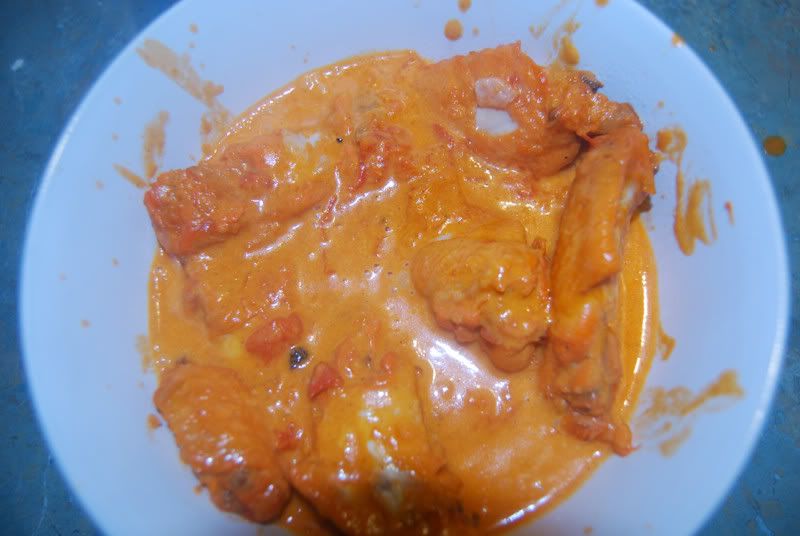
Mild curry of chicken wings
This is a very mild curry using my favourite cut of chicken, the wing, as the primary ingredient. If you want, you can add a little fire to this curry by adding either some more fresh chilli or a teaspoon of chilli powder to the paste. Too, if you're not a fan of wings, you could always use drumsticks or chops. Anything with a bone is good.
Ingredients:
1 kg chicken wings, halved at the joint and tips removed
800 mL coconut milk
8 whole black peppercorns
4 garlic cloves, peeled
3 small chillies, stems removed
2 tomatoes, diced
1 large onion, cut into chunks
1 small lump of ginger, peeled
1/2 cinnamon stick, snapped into small pieces (this is very important or you'll trash your food processor)
1 tsp apple cider vinegar, plus extra to form curry paste
1 tsp coriander seeds
1 tsp sesame seeds
1/2 tsp cardamon powder
1/2 tsp cumin seeds
1/2 tsp garam masala
1/2 tsp hot curry powder
1/4 tsp tandoori colouring
sea salt
oil
steamed rice, to serve
Place the chillies, garlic, ginger, onion, cardamon, cinnamon, coriander, cumin, sesame seeds, curry powder and tandoori colouring in a food processor. Blitz, slowly adding apple cider vinegar until a paste forms.
Season the tomatoes generously with salt.
Heat a generous splash of of oil in a large saucepan over a medium flame. When hot, add the paste and fry for five minutes. Add the chicken wings and cook for five minutes, stirring constantly to ensure the wings get an even coating of paste. Add the tomatoes and stir. Cook for a further five minutes. Add the coconut milk, apple cider vinegar and garam masala and bring to a simmer. Cook for 25-30 minutes. You may not want to serve all the gravy.

Ingredients:
1 kg chicken wings, halved at the joint and tips removed
800 mL coconut milk
8 whole black peppercorns
4 garlic cloves, peeled
3 small chillies, stems removed
2 tomatoes, diced
1 large onion, cut into chunks
1 small lump of ginger, peeled
1/2 cinnamon stick, snapped into small pieces (this is very important or you'll trash your food processor)
1 tsp apple cider vinegar, plus extra to form curry paste
1 tsp coriander seeds
1 tsp sesame seeds
1/2 tsp cardamon powder
1/2 tsp cumin seeds
1/2 tsp garam masala
1/2 tsp hot curry powder
1/4 tsp tandoori colouring
sea salt
oil
steamed rice, to serve
Place the chillies, garlic, ginger, onion, cardamon, cinnamon, coriander, cumin, sesame seeds, curry powder and tandoori colouring in a food processor. Blitz, slowly adding apple cider vinegar until a paste forms.
Season the tomatoes generously with salt.
Heat a generous splash of of oil in a large saucepan over a medium flame. When hot, add the paste and fry for five minutes. Add the chicken wings and cook for five minutes, stirring constantly to ensure the wings get an even coating of paste. Add the tomatoes and stir. Cook for a further five minutes. Add the coconut milk, apple cider vinegar and garam masala and bring to a simmer. Cook for 25-30 minutes. You may not want to serve all the gravy.
Saturday, January 10, 2009
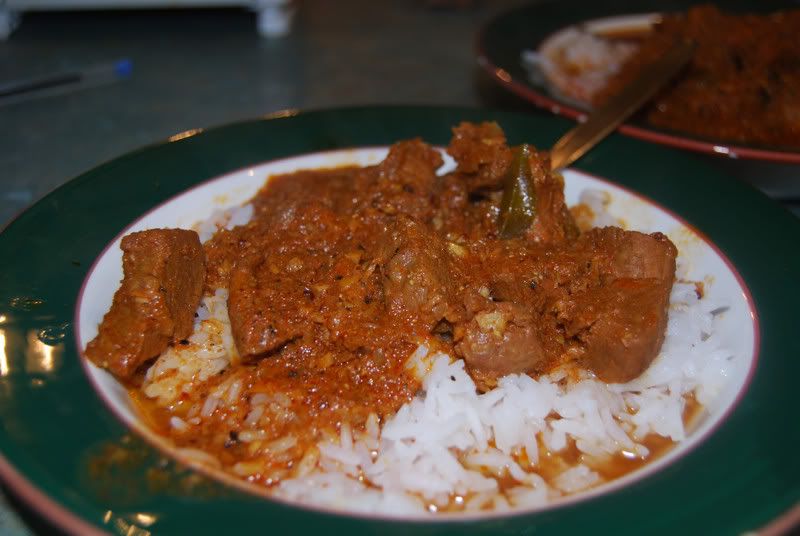
Wild boar vindaloo
I've used wild boar for this recipe, but there's nothing stopping you from using pork. Use good pork, though. Cheap, lean, mass-produced crap from the supermarket doesn't count as good pork. If you're curious to sample wild boar, you can order it from a good butcher or poultry store. Or go kill it. Too, this recipe makes enough for two people.
Ingredients:
350 g wild boar or pork tenderloin, cut into bite-sized cubes
6 fresh curry leaves
3 cloves garlic, peeled
1 large shallot, peeled
1 small lump of ginger, peeled
1 tbs cider vinegar
1 tbs sweet paprika
2 whole cloves
1 tsp whole black peppercorns
1 tsp whole black mustard seeds
1 tsp coriander seeds
1/2 tsp brown sugar
1/2 tsp cumin seeds
1/2 tsp sea salt
1/4 tsp ground turmeric
vegetable, sunflower or peanut oil
steamed rice, to serve
At least a few hours--but ideally a day--before, grind the black peppercorns, cloves, coriander seeds, cumin seeds and 1/2 tsp black mustard seeds with a mortar and pestle. Then pour them into the bowl of a food processor. Blitz along with the brown sugar, cider vinegar, garlic, ginger, sea salt, shallot, sweet paprika, turmeric and 1 1/2 tbs water. You're making a curry paste, now. It should be thick, sure, but still a paste. If it seems a little dry--and that's possible, I mean, depending on the size of the shallot and the garlic cloves--add a little more cider vinegar. When you have a smooth paste, combine it with the cubed wild boar in a bowl. Rub the paste into the boar. Cover the bowl with cling film and refrigerate overnight.
Heat a generous splash of oil in a small, non-stick, lidded pan over a medium flame. Add the remaining 1/2 tsp of black mustard seeds and the curry leaves. Fry until the seeds begin to pop, then add the meat and its marinade. Fry for maybe five minutes--just enough to seal the meat--and then add 350 mL water. Stir and bring to boil, then cover the pan, reduce the heat to low and simmer for forty minutes, stirring occasionally. Remove lid and simmer for a further twenty minutes.

Ingredients:
350 g wild boar or pork tenderloin, cut into bite-sized cubes
6 fresh curry leaves
3 cloves garlic, peeled
1 large shallot, peeled
1 small lump of ginger, peeled
1 tbs cider vinegar
1 tbs sweet paprika
2 whole cloves
1 tsp whole black peppercorns
1 tsp whole black mustard seeds
1 tsp coriander seeds
1/2 tsp brown sugar
1/2 tsp cumin seeds
1/2 tsp sea salt
1/4 tsp ground turmeric
vegetable, sunflower or peanut oil
steamed rice, to serve
At least a few hours--but ideally a day--before, grind the black peppercorns, cloves, coriander seeds, cumin seeds and 1/2 tsp black mustard seeds with a mortar and pestle. Then pour them into the bowl of a food processor. Blitz along with the brown sugar, cider vinegar, garlic, ginger, sea salt, shallot, sweet paprika, turmeric and 1 1/2 tbs water. You're making a curry paste, now. It should be thick, sure, but still a paste. If it seems a little dry--and that's possible, I mean, depending on the size of the shallot and the garlic cloves--add a little more cider vinegar. When you have a smooth paste, combine it with the cubed wild boar in a bowl. Rub the paste into the boar. Cover the bowl with cling film and refrigerate overnight.
Heat a generous splash of oil in a small, non-stick, lidded pan over a medium flame. Add the remaining 1/2 tsp of black mustard seeds and the curry leaves. Fry until the seeds begin to pop, then add the meat and its marinade. Fry for maybe five minutes--just enough to seal the meat--and then add 350 mL water. Stir and bring to boil, then cover the pan, reduce the heat to low and simmer for forty minutes, stirring occasionally. Remove lid and simmer for a further twenty minutes.
Friday, January 9, 2009
Curried Morton Bay bugs
Morton--sometimes spelt as Morten--Bay bugs are my favourite crustacean. Easy. The meat-to-shell ratio isn't too bad in comparison with, say, scampi and crab. The flavour is tops. And too, in Melbourne, where the bugs aren't as popular as they are in Sydney, they're reasonably affordable. I picked up a few on special today and figured I'd make a curry with them.
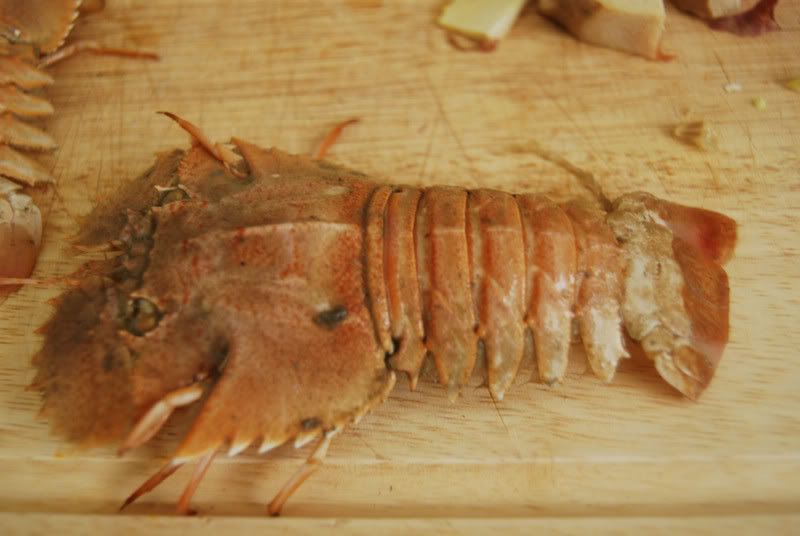
Of course, if you're not from Australia, you probably don't have access to bugs at all. I'm not sure if we export them, but if we do they'd probably be ridiculously overpriced. Feel free to substitute the bugs with a crustacean of your choosing--scampi, prawns, crayfish, crab, whatever. Keep in mind you may need to adjust the quantity of gravy and cooking times if you're using something other than bugs. This recipe makes enough for two people.
Ingredients:
8 Morton Bay/Balmain bugs (12 if they're small)
200 mL can coconut milk
2 cloves garlic, peeled
1 large shallot, peeled
1 small lump of ginger, peeled
1 piece of tamarind* that's about the size of your thumbnail
1 small lemon, juiced
1/2 tsp chilli powder
1/2 tsp freshly ground coriander
1/2 tsp cumin seeds
1/2 tsp poppy seeds
vegetable, sunflower or peanut oil
steamed rice, to serve
Place the piece of tamarind in 100 mL hot water and set aside.
Combine 100 mL of the coconut milk with 200 mL water. Leave the other 100 mL undiluted.
Blitz the spices, garlic, shallot, ginger, lemon juice and 1 tsp water in a food processor. This will be your curry paste.
Extract the meat from the tails of the bugs by twisting the tails off and then breaking a couple of tail segments with your fingers or the tip of a knife. If you do it right, you'll be able to pull the meat out in one piece.
Heat a generous splash of oil in a small saucepan over a low flame. When hot, add the curry paste and fry for five minutes. Add the diluted coconut milk. Stir. Cook for fifteen minutes. Pluck the tamarind piece out of the water it was soaking in. Don't worry if there's a little bit left behind. Pour the water, along with the undiluted coconut milk, into the saucepan. Cook for a further fifteen minutes before adding the bug meat. Simmer for a couple of minutes or until cooked through.
Use a pair of tongs to fish out the bugs and distribute them evenly atop two piles of steamed rice. Spoon over the gravy and serve.
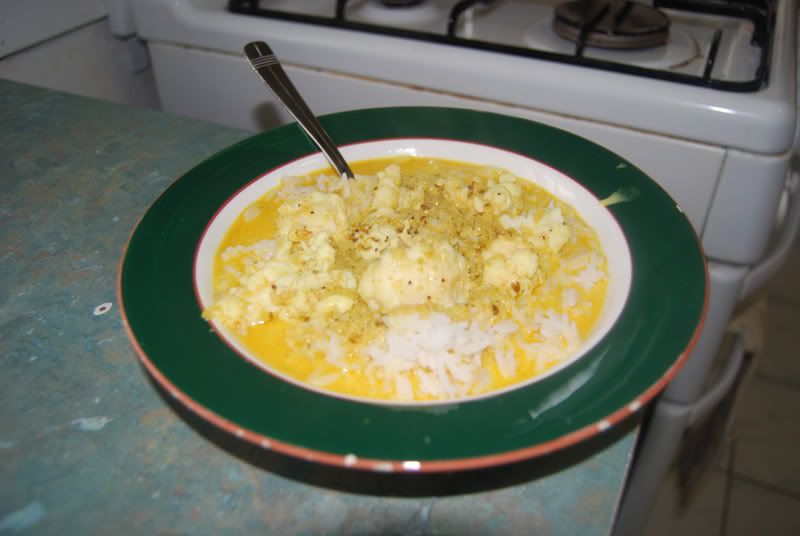
* Tamarind can be found in Indian and Sri Lankan grocers. You can buy it in concentrate form, but in this recipe we're using a bar. In my local places, at least, tamarind bars are sold near the spices. They're about the size of a small block of chocolate and look, well, kind of nasty. Like they're mouldly. Feel free to substitute the concentrate for the bar, but be careful--the concentrate is really potent stuff, so you'd only want to use the tiniest amount.

Of course, if you're not from Australia, you probably don't have access to bugs at all. I'm not sure if we export them, but if we do they'd probably be ridiculously overpriced. Feel free to substitute the bugs with a crustacean of your choosing--scampi, prawns, crayfish, crab, whatever. Keep in mind you may need to adjust the quantity of gravy and cooking times if you're using something other than bugs. This recipe makes enough for two people.
Ingredients:
8 Morton Bay/Balmain bugs (12 if they're small)
200 mL can coconut milk
2 cloves garlic, peeled
1 large shallot, peeled
1 small lump of ginger, peeled
1 piece of tamarind* that's about the size of your thumbnail
1 small lemon, juiced
1/2 tsp chilli powder
1/2 tsp freshly ground coriander
1/2 tsp cumin seeds
1/2 tsp poppy seeds
vegetable, sunflower or peanut oil
steamed rice, to serve
Place the piece of tamarind in 100 mL hot water and set aside.
Combine 100 mL of the coconut milk with 200 mL water. Leave the other 100 mL undiluted.
Blitz the spices, garlic, shallot, ginger, lemon juice and 1 tsp water in a food processor. This will be your curry paste.
Extract the meat from the tails of the bugs by twisting the tails off and then breaking a couple of tail segments with your fingers or the tip of a knife. If you do it right, you'll be able to pull the meat out in one piece.
Heat a generous splash of oil in a small saucepan over a low flame. When hot, add the curry paste and fry for five minutes. Add the diluted coconut milk. Stir. Cook for fifteen minutes. Pluck the tamarind piece out of the water it was soaking in. Don't worry if there's a little bit left behind. Pour the water, along with the undiluted coconut milk, into the saucepan. Cook for a further fifteen minutes before adding the bug meat. Simmer for a couple of minutes or until cooked through.
Use a pair of tongs to fish out the bugs and distribute them evenly atop two piles of steamed rice. Spoon over the gravy and serve.

* Tamarind can be found in Indian and Sri Lankan grocers. You can buy it in concentrate form, but in this recipe we're using a bar. In my local places, at least, tamarind bars are sold near the spices. They're about the size of a small block of chocolate and look, well, kind of nasty. Like they're mouldly. Feel free to substitute the concentrate for the bar, but be careful--the concentrate is really potent stuff, so you'd only want to use the tiniest amount.
Monday, January 5, 2009
Crocodile in coconut milk
Crocodile meat is quite mild in flavour. A bit like chicken. A bit like firm, white fish. Cook it incorrectly and it'll be tough as a roadside shoe. Cook it correctly and it's wonderful. This gravy, simple as it is, can be used for chicken and various kinds of seafood.
Where to get crocodile, you ask? Well, you could try a butcher or poultry store. Ask them to order it in. Or you could do as I do and hit an oriental-owned and operated fishmonger--especially one that specialises in frozen produce. Crocodile is always sold frozen. Most will sell crocodile steaks for a reasonable price.
Ingredients:
800 gram crocodile steak, cut into thin strips
300 mL coconut milk
2 shallots, diced
2 cloves garlic, crushed
2 red chillis, finely diced
1 lime, juiced
small lump of ginger, grated
1 tsp fish sauce
a couple of sprigs of fresh coriander, leaves picked
a couple of sprigs of sweet (Thai) basil, leaves picked
steamed rice, to serve
Heat a little oil in a fry pan over a low-medium flame. Fry shallots, garlic, ginger and chillies until they start to soften, then add the crocodile. Fry, stirring constantly, for 4-5 minutes before adding the coconut milk, fish sauce, sweet basil leaves and coriander leaves. Bring to boil then reduce heat and simmer for 2-3 minutes. Squeeze in the lime juice and give a final stir
Where to get crocodile, you ask? Well, you could try a butcher or poultry store. Ask them to order it in. Or you could do as I do and hit an oriental-owned and operated fishmonger--especially one that specialises in frozen produce. Crocodile is always sold frozen. Most will sell crocodile steaks for a reasonable price.
Ingredients:
800 gram crocodile steak, cut into thin strips
300 mL coconut milk
2 shallots, diced
2 cloves garlic, crushed
2 red chillis, finely diced
1 lime, juiced
small lump of ginger, grated
1 tsp fish sauce
a couple of sprigs of fresh coriander, leaves picked
a couple of sprigs of sweet (Thai) basil, leaves picked
steamed rice, to serve
Heat a little oil in a fry pan over a low-medium flame. Fry shallots, garlic, ginger and chillies until they start to soften, then add the crocodile. Fry, stirring constantly, for 4-5 minutes before adding the coconut milk, fish sauce, sweet basil leaves and coriander leaves. Bring to boil then reduce heat and simmer for 2-3 minutes. Squeeze in the lime juice and give a final stir
Sunday, January 4, 2009
Kenyan coconut chicken
This is one of my favourite dishes ever. Really. It's so simple, so flavoursome. It has a lot of my favourite flavours, right there--garlic and coriander, corn-fed chicken and chilli. Most of the ingredients--the spices, the coconut milk, the chilli, the onions, the garlic, the ginger--I pretty much always have kicking around the pantry. When I feel like making this, all I have to buy, normally, is the chicken itself and the tomatoes. You can, of course, use canned tomatoes for this dish.
4 chicken legs (that is, the thighs and drumsticks), ideally free-range, organic or corn-fed
400mL coconut milk, shaken
4 tomatoes, peeled and diced
4 cloves garlic, crushed
2 onions, sliced
1 chilli, diced
1 tbs desiccated or, better still, freshly grated coconut
1 tbs freshly ground black pepper
1 tsp freshly ground coriander seeds
a small lump of ginger
a couple of springs of fresh coriander, leaves picked
a generous pinch of sea salt
sunflower or vegetable oil
steamed rice, to serve
Pre-heat the broiler to medium high. Peel way the skin from the chicken legs and discard. Prick flesh all over with a skewer or fork, then rub oil, sea salt and ground pepper into the flesh. Broil until flesh is lightly browned.
Meanwhile, fry onions, garlic and ginger in sunflower oil in a large, lidded pan over a low heat. Add the diced chilli, tomatoes and ground coriander. Cook until the tomatoes have gone mushy--between five and ten minutes, depending on the size of the tomatoes, the pan and the exact temperature. Add the coconut milk and stir. Then add the chicken pieces. Place the lid over the pan and cook for a good 40-50 minutes, removing the lid every so often to stir the gravy and turn the chicken legs. Once cooked, turn off the heat and use tongs to place a chicken leg into each bowl. Spoon the gravy over the chicken legs. Garnish each portion with a sprinkle of desiccated coconut and a few coriander leaves.
4 chicken legs (that is, the thighs and drumsticks), ideally free-range, organic or corn-fed
400mL coconut milk, shaken
4 tomatoes, peeled and diced
4 cloves garlic, crushed
2 onions, sliced
1 chilli, diced
1 tbs desiccated or, better still, freshly grated coconut
1 tbs freshly ground black pepper
1 tsp freshly ground coriander seeds
a small lump of ginger
a couple of springs of fresh coriander, leaves picked
a generous pinch of sea salt
sunflower or vegetable oil
steamed rice, to serve
Pre-heat the broiler to medium high. Peel way the skin from the chicken legs and discard. Prick flesh all over with a skewer or fork, then rub oil, sea salt and ground pepper into the flesh. Broil until flesh is lightly browned.
Meanwhile, fry onions, garlic and ginger in sunflower oil in a large, lidded pan over a low heat. Add the diced chilli, tomatoes and ground coriander. Cook until the tomatoes have gone mushy--between five and ten minutes, depending on the size of the tomatoes, the pan and the exact temperature. Add the coconut milk and stir. Then add the chicken pieces. Place the lid over the pan and cook for a good 40-50 minutes, removing the lid every so often to stir the gravy and turn the chicken legs. Once cooked, turn off the heat and use tongs to place a chicken leg into each bowl. Spoon the gravy over the chicken legs. Garnish each portion with a sprinkle of desiccated coconut and a few coriander leaves.
Subscribe to:
Posts (Atom)

 Posts
Posts

